牛马 human beasts of burden — workers calling themselves oxen and horses LIT. ox-horse
Chinese workers call themselves 牛马 — oxen and horses — when ‘employee’ sounds too flattering. The joke demotes a person from professional to load-bearing animal, then adds the modern indignity: real livestock stops when tired. The human animal makes coffee, pays for the internship and clocks back in. It is labour criticism delivered as a species correction.
Rejected translations: corporate slave · workhorse · cattle and horses
THE RESOU DICTIONARY — SLANG THE CHINESE INTERNET USES EVERY DAY, DEFINED IN ENGLISH AND CITED FROM REAL COMMENT SECTIONS.
Attested in the wild
THE OED CITES SHAKESPEARE. WE CITE THE COMMENT SECTION. — 3 REAL SIGHTINGS, IDS BLURRED · SCREENSHOTS ARCHIVED JUL–AUG 2026 · TWO COMMENT SECTIONS AND ONE CINEMA LOBBY

AI需要付费才能工作,而牛马们,甚至会倒贴
“AI has to be paid before it works. The human beasts of burden will even pay out of their own pocket.”
The plural 牛马们 turns scattered applicants into one labouring species. The sentence is funny because its economic comparison is structurally absurd and uncomfortably accurate: the machine requires payment; the human may pay for the privilege of becoming employable.
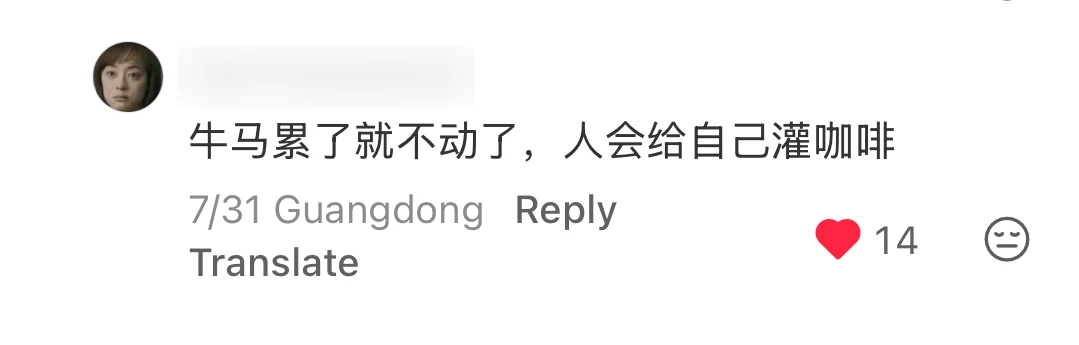
牛马累了就不动了,人会给自己灌咖啡
“Real oxen and horses stop when they are tired. Human beasts of burden pour coffee into themselves and keep going.”
One reply is enough to make the metaphor literal again. Actual oxen and horses possess the limit the office worker has lost: they stop. The human being therefore ranks below the animal not in intelligence, but in permission to be tired.
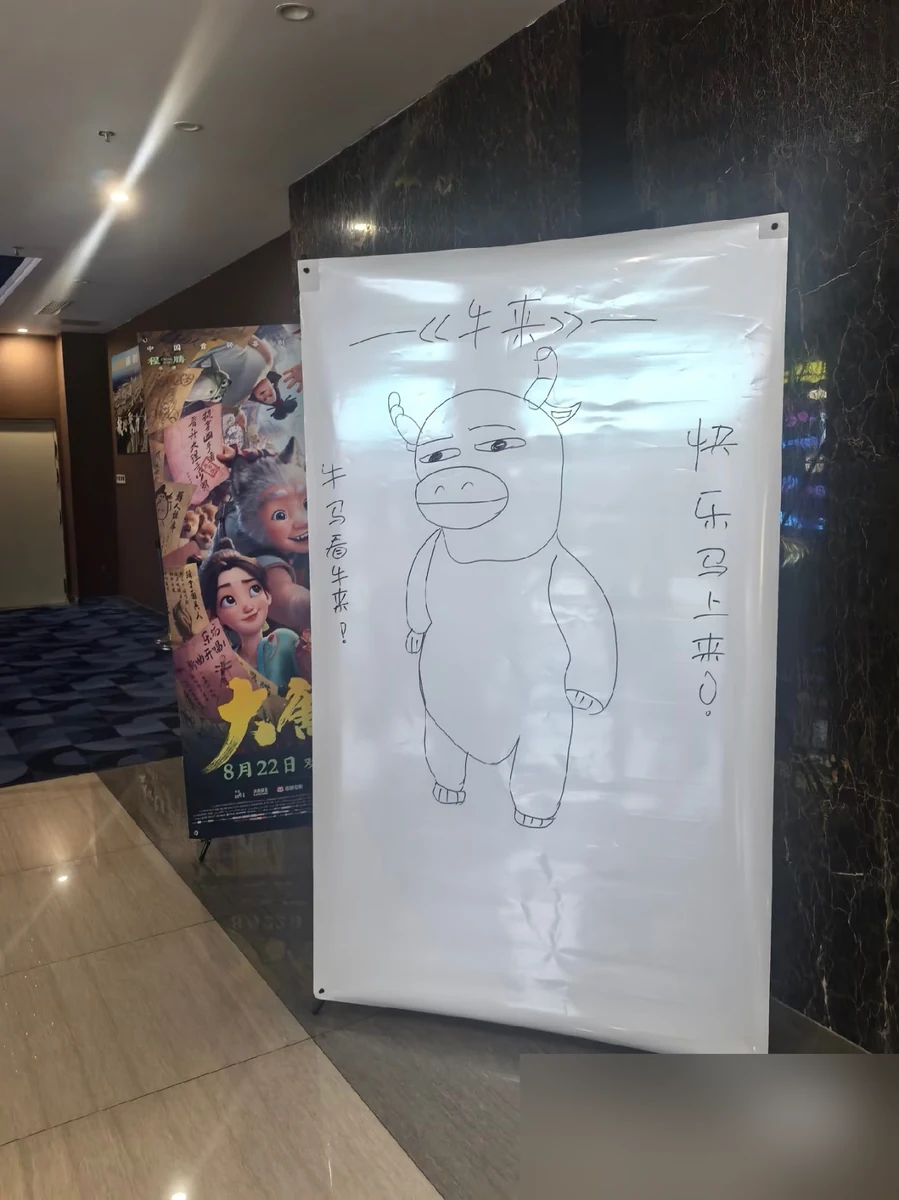
牛马看牛来!快乐马上来。
“Beasts of burden, come see Niu Lai — and happiness will be here in no time.”
The word has left the comment box and reached the cinema lobby. A handmade poster calls its own audience 牛马, then gives each animal a second shift: the ox carries the film title; the horse carries the promise that happiness is coming. The reader is simultaneously a worker, an animal and a customer invited to the film.
The word
牛马 means human beasts of burden: workers calling themselves oxen and horses.
It is not a job title. It is the correction underneath one. Calling yourself an “employee” preserves a desk, a contract and some professional dignity; calling yourself 牛马 removes the desk and keeps only the load. The humour comes from performing that demotion before management, the economy or another commenter can do it for you.
The criticism remains real, but the usual voice is dry rather than declamatory. A person says 我们牛马 — “we human beasts of burden” — and joins an imaginary workforce large enough to include applicants paying for internships, office workers medicating fatigue with coffee and cinema customers arriving after work.
How it’s built
牛 niú is an ox or cow; 马 mǎ is a horse. Put together, they are the animals traditionally made to pull, carry and keep moving for somebody else. Contemporary internet slang turns that pair into a human category.
The compound stays unusually available for further jokes because both animals remain visible inside it. A commenter can use 牛马 metaphorically in one clause, then compare the human worker with literal cattle in the next. A cinema poster can call its audience 牛马, place the phrase beside a film called Niu Lai, and end on 马上来 — “coming right away”, with the horse character still sitting in plain sight.
Where it took off
There is no honest single-post origin to claim. 牛 and 马 have carried labouring imagery for far longer than the social platforms now using them, while the compact modern label spread through workplace jokes, job-search posts and comment sections without one traceable inventor.
What can be documented is the word’s present range. It appears as a plural identity — 牛马们 — inside a discussion of human labour being cheaper than AI. It immediately generates a literal-animal reply about exhaustion. By August 2026, it was also large enough to be handwritten on a cinema poster as an affectionate name for the paying public. A workplace insult had become audience address.
How to use it
- Name your own side: 我们牛马还得上班 “we human beasts of burden still have to work”. The self-inclusion is what keeps the sentence comic rather than contemptuous.
- Describe the role: 白天当牛马,晚上刷手机 “a human beast of burden by day, scrolling by night”. Here 牛马 is something one works as, not something one biologically is.
- Let the animals back in: 牛马累了会停,人类牛马只会续咖啡 “real beasts stop when tired; human 牛马 just refill the coffee”. The literal and figurative readings are allowed to occupy the same sentence.
In English, human beasts of burden best preserves both the load-bearing image and the fact that people are placing themselves among the animals. Corporate slaves may fit a harsher sentence, but it overstates the usual register and loses the animal machinery that lets later jokes work.
When it goes wrong
Call yourself 牛马, or include yourself in 我们牛马, and the phrase can carry exhaustion, solidarity and criticism at once. Call your employees 牛马 from above and the self-mockery disappears. What remains is simply a boss describing people as livestock.
Nor is workhorse a safe default. English often uses it as praise for someone reliable and productive. 牛马 is rarely asking for that compliment. It names the indignity of being useful under conditions one did not design — and the further indignity of knowing exactly what is happening while continuing anyway.
Why it doesn’t translate
Cattle and horses keeps the zoology and loses the office. Corporate slaves keeps the exploitation and loses the wordplay. Workhorses keeps the labour and can sound admiring. Beasts of burden comes close, but it often describes people from the outside. Adding human restores the self-demotion: the workers are naming themselves as the human branch of the load-bearing animals.
The translation therefore has to move with the joke. Use human beasts of burden when the human class is foregrounded, oxen and horses when a reply deliberately returns to real animals, and keep niú mǎ nearby when the characters themselves are about to generate another pun. The inconsistency is not a failure to choose. It is evidence that the Chinese word is still doing more than one job.
- #000 热搜 “trending, with a hand on the dial”
- #001 momo “the shared alias”
- #002 眼前一黑 “and everything went dark”
- #003 能工智人 “the working sapiens”
- #004 望周知 “please be advised”
- #005 普信男 “so ordinary, so confident”
- #006 负鼠 “the opossum”, and the philosophy that comes with it
- #007 钟馗 China's demon-quelling guardian — a role assembled across ritual, legend, religion, theatre and art
- #009 牛来 Niu Lai — a homemade film title that became a quality test, a chain of puns and, briefly, a living creature
- #010 背锅 to take the fall — especially for blame that belongs elsewhere
- #011 抽象 so far outside ordinary logic that the wrongness becomes the aesthetic
- #012 来都来了 well, we're already here