抽象 so far outside ordinary logic that the wrongness becomes the aesthetic LIT. abstract; abstraction
Standard Chinese gives 抽象 the sober job of meaning ‘abstract.’ The internet gives it work after reality has stopped making sense: a style, object or situation can become 抽象 when its logic is broken, its appearance is bizarre and the failure itself is funny. It may be criticism, affection or both. The translator must choose among surreal, unhinged, absurd and wild; the Chinese word keeps all four within reach.
Rejected translations: abstract every time · random · cringe
THE RESOU DICTIONARY — SLANG THE CHINESE INTERNET USES EVERY DAY, DEFINED IN ENGLISH AND CITED FROM REAL COMMENT SECTIONS.
Attested in the wild
THE OED CITES SHAKESPEARE. WE CITE THE COMMENT SECTION. — 3 REAL SIGHTINGS, IDS BLURRED · SCREENSHOTS ARCHIVED AUG 2026 · THREE COMMENT SECTIONS
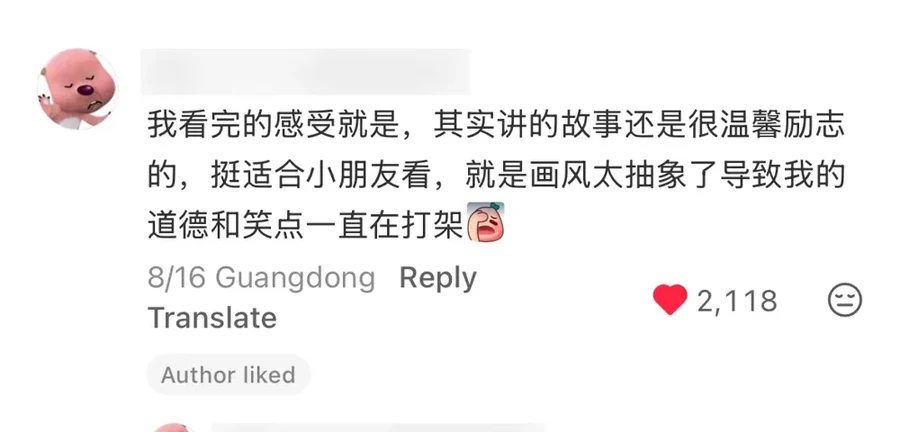
我看完的感受就是,其实讲的故事还是很温馨励志的,挺适合小朋友看,就是画风太抽象了导致我的道德和笑点一直在打架。
“What I took away was that the story itself is warm and inspiring—good for children. It’s just that the visuals are so unhinged my conscience and my sense of humour keep fighting.”
Here 抽象 judges a visual style, but the next clause supplies the real definition: sympathy says the film deserves sincerity; laughter keeps reporting what the eyes can see. The word holds both reactions without resolving them.
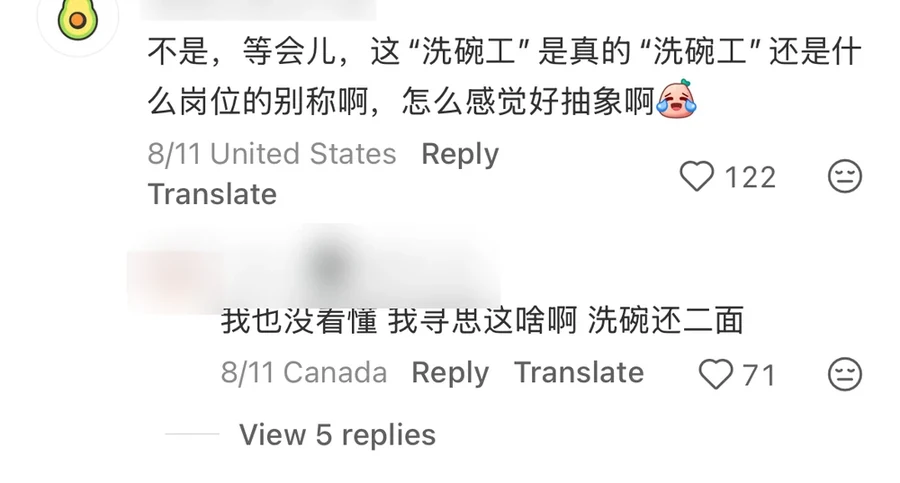
不是,等会儿,这“洗碗工”是真的“洗碗工”还是什么岗位的别称啊,怎么感觉好抽象啊。
“Hold on. Is ‘dishwasher’ an actual dishwasher, or is it code for some other role? Why does this whole thing feel so surreal?”
Nothing in the sentence is visually abstract. The entire situation is: a literal dishwasher appears to be passing through a corporate interview process. 好抽象 names the moment ordinary explanation stops being sufficient.
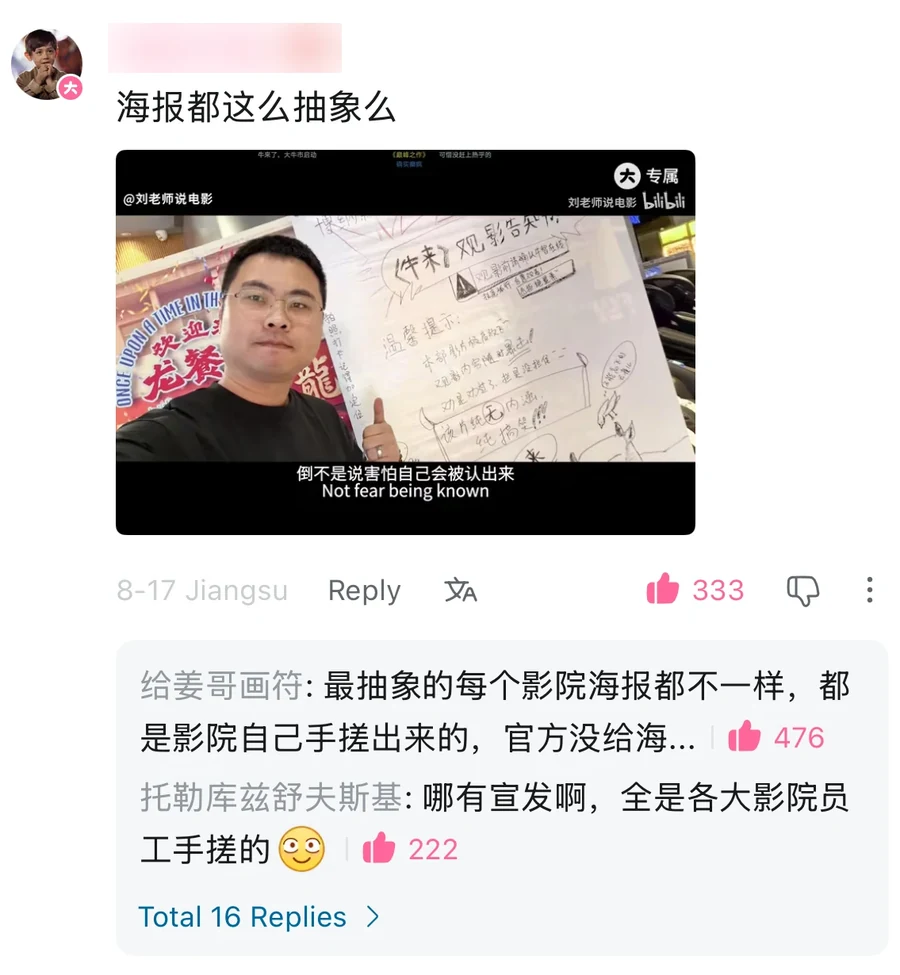
海报都这么抽象么
“Are all the posters this unhinged?”
The word arrives as a question — can posters really be this 抽象? The replies answer with the same word: the truly 抽象 part is that every cinema drew its own, because the distributor never supplied one. Once the question and its explanation share the adjective, 抽象 has stopped judging one image and started naming the whole situation.
The word
抽象 is the internet’s judgment for something so far outside ordinary logic, taste or proportion that its wrongness becomes the aesthetic.
In standard Chinese, the word still does its respectable work: abstract art, abstract concepts, the opposite of the concrete. Online, it is often said while looking at something painfully concrete — a homemade cinema poster, a strangely rendered face, a dishwasher being interviewed as though the plates require stakeholder management.
The speaker is not always condemning what they see. 抽象 can carry disbelief, mockery, fascination and genuine affection in the same two characters. Something may be bad in an interesting enough way to become 抽象, or deliberately made 抽象 because the audience already knows how to enjoy the register.
How it’s built
抽 chōu can mean to draw or pull out; 象 xiàng can mean an image, form or appearance. But modern 抽象 is a settled compound, not a fresh character puzzle. Its ordinary meaning is simply abstract or abstraction.
That ordinary sense remains intact in 抽象艺术 “abstract art” and 抽象概念 “an abstract concept.” The internet extension reverses the viewing direction. Instead of moving away from a concrete object toward an idea, the viewer encounters a very concrete object whose logic can no longer be processed in the usual way. The object has not disappeared. Normal interpretation has.
Where it took off
We cannot honestly name a first post. 抽象 was a standard word long before social media, and its internet sense looks like semantic drift rather than a coinage with one inventor.
By the time it appears in RESOU’s 2026 corpus, the drift is complete enough to travel. A film’s drawing style is 抽象. A cinema poster is 抽象. A hiring story becomes 抽象 before the reader has even decided whether “dishwasher” is literal. The word no longer belongs only to art or images; it can classify a whole situation whose internal rules have become visible precisely because they have stopped making sense.
How to use it
- As a verdict on the whole situation: 这也太抽象了 “this is so surreal.” Nothing needs to be visually strange; the sequence of events itself can defeat ordinary explanation.
- As a judgment on style: 这个画风太抽象了 “these visuals are completely unhinged.” The translator chooses for effect, not for the dictionary headword.
- As a category: 这已经不是奇怪了,这是纯抽象 “this isn’t merely weird anymore. It is pure absurdity.” Once 抽象 becomes the noun, the failure has acquired a genre.
When it goes wrong
Translate every 抽象 as abstract and a comment section begins to sound like an art history seminar. The literal English word is correct for concepts and artistic movements; it is usually too bloodless for a bizarre face, an incoherent process or a cinema warning customers that the film contains nothing but 抽象.
But unhinged cannot replace it every time either. Unhinged is sharper and often makes someone sound actively deranged. Surreal can sound dreamlike or polished. Absurd may be too intellectual; wild may be too mild. The Chinese speaker can leave the exact species of strangeness open and let the shared image settle it.
Calling a person 抽象 can also land harder than calling a situation 抽象. It may reduce someone’s appearance or behaviour to spectacle. The safest use is self-directed, aimed at an object or aimed at a public situation whose broken logic is already the joke.
Why it doesn’t translate
The internet sense of 抽象 is not one English adjective. It is a small control panel: surreal for reality slipping, unhinged for force, absurd for broken logic, wild for delighted disbelief. Context decides which light turns on.
That flexibility is the point. 抽象 can criticise a failure, admire its audacity and name the aesthetic that grows around it without changing words. English wants the translator to choose the species of strangeness. 抽象 lets the screenshot choose.
- #000 热搜 “trending, with a hand on the dial”
- #001 momo “the shared alias”
- #002 眼前一黑 “and everything went dark”
- #003 能工智人 “the working sapiens”
- #004 望周知 “please be advised”
- #005 普信男 “so ordinary, so confident”
- #006 负鼠 “the opossum”, and the philosophy that comes with it
- #007 钟馗 China's demon-quelling guardian — a role assembled across ritual, legend, religion, theatre and art
- #008 牛马 human beasts of burden — workers calling themselves oxen and horses
- #009 牛来 Niu Lai — a homemade film title that became a quality test, a chain of puns and, briefly, a living creature
- #010 背锅 to take the fall — especially for blame that belongs elsewhere
- #012 来都来了 well, we're already here