momo “the shared alias”
momo is not a person. It is the name millions of Chinese users wear at once — same handle, same stock cartoon avatar — so that anything they say arrives unsigned. Not a burner account. A costume everyone owns.
Rejected translations: anon · throwaway account · Jane Doe
THE RESOU DICTIONARY — SLANG THE CHINESE INTERNET USES EVERY DAY, DEFINED IN ENGLISH AND CITED FROM REAL COMMENT SECTIONS.
Attested in the wild
THE OED CITES SHAKESPEARE. WE CITE THE COMMENT SECTION. — 3 REAL SIGHTINGS, SHOWN WITH THE NAME INTACT — IT IDENTIFIES NOBODY, WHICH IS THE POINT
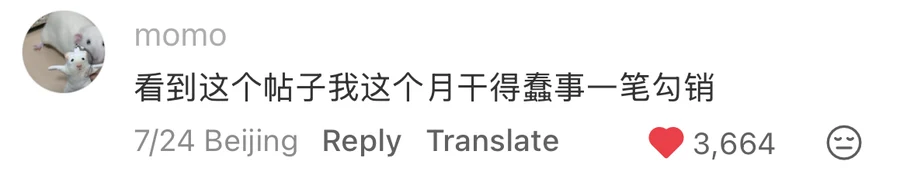
看到这个帖子我这个月干得蠢事一笔勾销
“This post just wiped every stupid thing I did this month off the books.”
The top comment on a 2,100-comment pile-up — the most-liked line in the whole argument, signed with a name that belongs to millions of people at once.
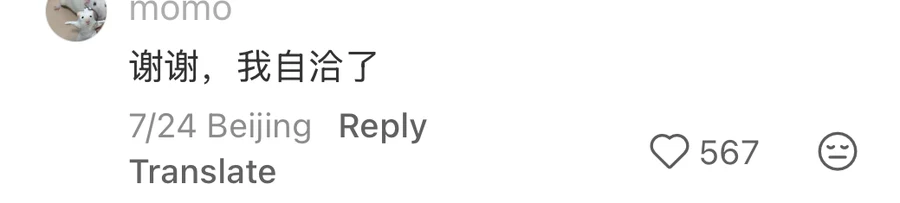
谢谢,我自洽了
“Thank you. I've made peace with myself now.”
A momo replying to a momo — read the two names above the two comments. Strangers in identical costume, having a conversation neither of them signed.
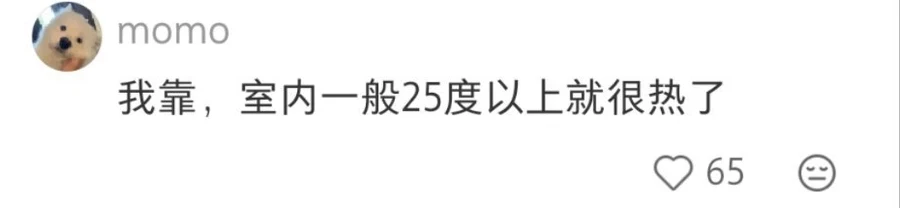
我靠,室内一般25度以上就很热了
“Dude, anything above 25 indoors is already hot.”
Different topic, different month, same name — momo turns up under office gossip as readily as under a national argument. Now compare the avatars with the two above: not the same picture. The name travels; the portrait is whichever stock one you were handed.
The word
Ask who said something on Xiaohongshu and the answer is very often momo — and so is the answer to the next three questions. It is one name worn by millions of accounts at the same time: same handle, same stock cartoon avatar, no bio.
The effect is not concealment so much as crowd. A momo is not hiding in a corner; a momo is hiding in a stadium full of people dressed exactly alike.
How it’s built
Not a coined word — a default setting that got adopted. Sign in without filling out a profile and the platform hands you a placeholder name and a stock avatar. What began as the mark of someone who couldn’t be bothered became the mark of someone who won’t be found.
The doubling does the rest of the work. It is written in latin letters, not characters — but it lands on a Chinese ear the way reduplication always does: small and soft, like 妹妹 mèimei, little sister or 猫猫 māomao, kitty. The name for a million anonymous strangers comes out sounding like something you’d call a pet. A mask that reads as harmless is a very good mask.
Where it took off
Nobody launched it. Around 2022 enough users noticed they were already anonymous together that staying that way became a choice rather than an oversight — and then a small point of pride. The population skews heavily female, which is the part that matters: the mask is worn most by the people who pay the highest price for being identifiable.
How to use it
- As a name: you don’t become a momo, you just stop filling in the profile.
- As a collective: momo 大军 “the momo army” — momos arriving under a post together.
- In English: “I said it as a momo” ≈ I said it somewhere it can’t be traced back to me. The nearest native equivalent is the anonymous-forum “we”, not “anon” — anon is one person with no name; momo is everyone with the same one.
When it goes wrong
Calling a specific woman “a momo” to her face flips it: it reads as you’re a nobody. The word is only warm when it is self-applied.
It is also not a synonym for troll. A momo is usually anonymous in order to say something true — about a boss, a husband, a salary, a diagnosis — not in order to attack. Translating momo as “troll account” gets the politics exactly backwards.
Why it doesn’t translate
anon is one unnamed person; momo is a million people sharing one name — the joke and the safety both come from the sharing. Throwaway account implies you made something for one use; momo is permanent and communal, less a burner than a uniform. Jane Doe is a name the authorities give you. momo is the name you take.
- #000 热搜 “trending, with a hand on the dial”
- #002 眼前一黑 “and everything went dark”
- #003 能工智人 “the working sapiens”
- #004 望周知 “please be advised”
- #005 普信男 “so ordinary, so confident”
- #006 负鼠 “the opossum”, and the philosophy that comes with it
- #007 钟馗 China's demon-quelling guardian — a role assembled across ritual, legend, religion, theatre and art
- #008 牛马 human beasts of burden — workers calling themselves oxen and horses
- #009 牛来 Niu Lai — a homemade film title that became a quality test, a chain of puns and, briefly, a living creature
- #010 背锅 to take the fall — especially for blame that belongs elsewhere
- #011 抽象 so far outside ordinary logic that the wrongness becomes the aesthetic
- #012 来都来了 well, we're already here