牛来 Niu Lai — a homemade film title that became a quality test, a chain of puns and, briefly, a living creature LIT. the ox comes
牛来 is the title of a visibly homemade Chinese animated film. Online, it quickly stopped behaving like only a title. Commenters used it to test the supposedly ‘good’ films it threatened, broke its characters open to summon a bull market and then the Buddha by rhyme, and spoke of the film as a creature whose entire life had been justified by finding one person who understood it. The craft stayed rough. The name acquired polish.
Rejected translations: The Cow Comes · Niu La Cattle · bad movie
THE RESOU DICTIONARY — SLANG THE CHINESE INTERNET USES EVERY DAY, DEFINED IN ENGLISH AND CITED FROM REAL COMMENT SECTIONS.
Attested in the wild
THE OED CITES SHAKESPEARE. WE CITE THE COMMENT SECTION. — 3 REAL SIGHTINGS, IDS BLURRED · SCREENSHOTS ARCHIVED AUG 2026 · FROM THE NIU LAI COMMENT SECTIONS

你都能被牛来驱逐了,你能是什么好币。
“If Niu Lai can drive your film out, how good could that film possibly have been?”
No actual currency is being compared with a movie. Niu Lai becomes a quality test for the professional films said to be its victims. The reply refuses to award them the label ‘good’ merely because their production values were higher.

冥币驱逐劣币了属于是。牛来牛来,牛市今天来了吗~如来
“This is no longer bad money driving out good — it is hell money driving out the bad. Niu Lai, Niu Lai: did the bull market arrive today? Ru Lai!”
The joke lowers the film and celebrates it in the same breath. Niu Lai is labelled worse than the merely bad professional films, yet it is the one winning the audience and the box office. Its name then opens into a bull-market pun before the rhyme pulls the Buddha into the comment for one final, unnecessary arrival.
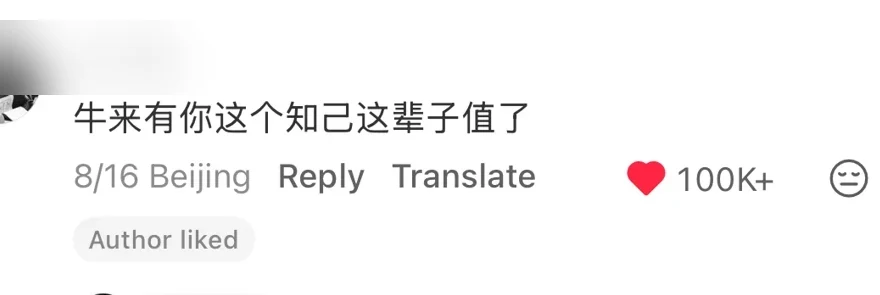
牛来有你这个知己,这辈子值了。
“Niu Lai found someone who truly understood it. That alone made its whole life worthwhile.”
The film is fully personified: it has a lifetime, the capacity to be understood and one witness sufficient to redeem both. The joke lands because the original post had cried sincerely at a film the rest of the internet approached as a dare.
The word
牛来 is the proper name of a Chinese animated film that its audience rapidly turned into a measure of sincerity, industrial confidence and whether being understood once is enough to justify an entire life.
The film arrived visibly handmade: stiff movement, rough modelling, almost no ordinary promotional machinery. Viewers initially bought tickets expecting permission to laugh. What complicated the joke was that many of them also found a warm story about a calf and his mother — and cried without ever becoming unable to see the roughness.
That double response moved the title beyond ordinary review language. 牛来 could be a bad film and an honest object in the same sentence. It could embarrass professional cinema, generate financial puns and receive the kind of consolation normally reserved for a person who had finally found one true friend.
How it’s built
牛 niú is an ox, cow or bull; 来 lái means to come or arrive. Together they are the name Niu Lai, belonging to the calf at the centre of the film and to the film itself.
As a title, the two characters should not automatically be replaced by The Cow Comes. That turns a proper name into a sentence and makes an intentionally plain Chinese name sound like an English art-film title. Keep Niu Lai. Explain the characters only when the comment section activates them — which it does almost immediately.
The title is unusually productive because it never seals itself shut. Repeat 牛来牛来 and a reader can hear both the name and “the bull has come”; place it beside 牛市, a bull market, and the box-office report starts trading as financial news. Add 如来 rú lái, the Buddhist Tathāgata, and meaning gives way to sound: the Buddha has been recruited simply because his Chinese title completes the rhyme.
Where it took off
The name began as the title of a family-made animated feature released in August 2026. Its first large online life was not conventional fandom but collective curiosity: people went to cinemas to see whether the object circulating in screenshots could really exist at feature length.
That audience did more than decide whether the film was good. It gave 牛来 several public jobs. In one argument, the film became the cheap, inferior product supposedly driving good cinema from the market — then a reply asked whether films unable to compete with it had deserved to be called good. At a box-office milestone, the metaphor escalated: Niu Lai became ‘hell money’ driving out merely bad films, while its name generated a bull-market pun and then a rhyme with the Buddha. Under a post by a viewer who cried for half an hour, 牛来 became a living thing that had found its 知己, the one person who truly understood it.
How to use it
- As the title: 我去看了《牛来》 “I went to see Niu Lai.” Keep the pinyin title; italics or book-title marks do the ordinary work.
- As a benchmark: 连牛来都能把你驱逐,你是什么好币 “if even Niu Lai can drive your film out, how good could it have been?” The money metaphor is translated back into the thing being judged: another film’s claim to quality.
- As a person: 牛来终于遇到知己了 “Niu Lai finally found the one person who understood it.” The work receives a biography because one viewer supplied the recognition.
When it goes wrong
Reduce 牛来 to a notoriously bad Chinese animation and the central contradiction disappears. The people who loved it did not necessarily deny the modelling, and the people who called it terrible did not necessarily hate the family effort behind it. The name became useful precisely because affection and ridicule were allowed to share it.
The opposite mistake is to polish the story into an inspirational fable about sincerity defeating the industry. Commenters repeatedly exercised the freedom to call the film bad. Its unusual dignity came partly from surviving that judgment without a fan army arriving to punish the speaker.
And Niu La Cattle belongs to a parody remake, not to the original title. It is a joke about the English-like sound of the name, useful as evidence of afterlife and wrong as a translation standard.
Why it doesn’t translate
The Cow Comes preserves the dictionary meanings and loses the name. Niu Lai preserves the name and hides the machinery that lets 牛 become a bull market and 来 become an arrival again. No single rendering can keep both states active at all times.
So keep Niu Lai while it behaves as a title or character. When a comment opens the name, translate the operation as well as the result: the bull has arrived, the bull market, Ru Lai, the Buddha, arriving by rhyme, a film given a lifetime. The title’s internet life depends on moving between proper noun and ordinary words without choosing one permanently. The translation should be allowed the same movement.
- #000 热搜 “trending, with a hand on the dial”
- #001 momo “the shared alias”
- #002 眼前一黑 “and everything went dark”
- #003 能工智人 “the working sapiens”
- #004 望周知 “please be advised”
- #005 普信男 “so ordinary, so confident”
- #006 负鼠 “the opossum”, and the philosophy that comes with it
- #007 钟馗 China's demon-quelling guardian — a role assembled across ritual, legend, religion, theatre and art
- #008 牛马 human beasts of burden — workers calling themselves oxen and horses
- #010 背锅 to take the fall — especially for blame that belongs elsewhere
- #011 抽象 so far outside ordinary logic that the wrongness becomes the aesthetic
- #012 来都来了 well, we're already here