背锅 to take the fall — especially for blame that belongs elsewhere LIT. carry-wok
背锅 turns blame into cookware and responsibility into a load somebody must physically carry. It means to take the fall, usually before the real cause has been fixed and often for a mistake that belongs to somebody else. English can preserve the unfairness or the object. The Chinese word keeps both within reach — which is why the internet keeps drawing the wok.
Rejected translations: carry the wok · take responsibility · scapegoat
THE RESOU DICTIONARY — SLANG THE CHINESE INTERNET USES EVERY DAY, DEFINED IN ENGLISH AND CITED FROM REAL COMMENT SECTIONS.
Attested in the wild
THE OED CITES SHAKESPEARE. WE CITE THE COMMENT SECTION. — 3 REAL SIGHTINGS, ACCOUNT REGIONS EXCLUDED FROM CROPS · SCREENSHOTS ARCHIVED AUG 2026 · TWO POSTS AND ONE CIRCULATING MEME
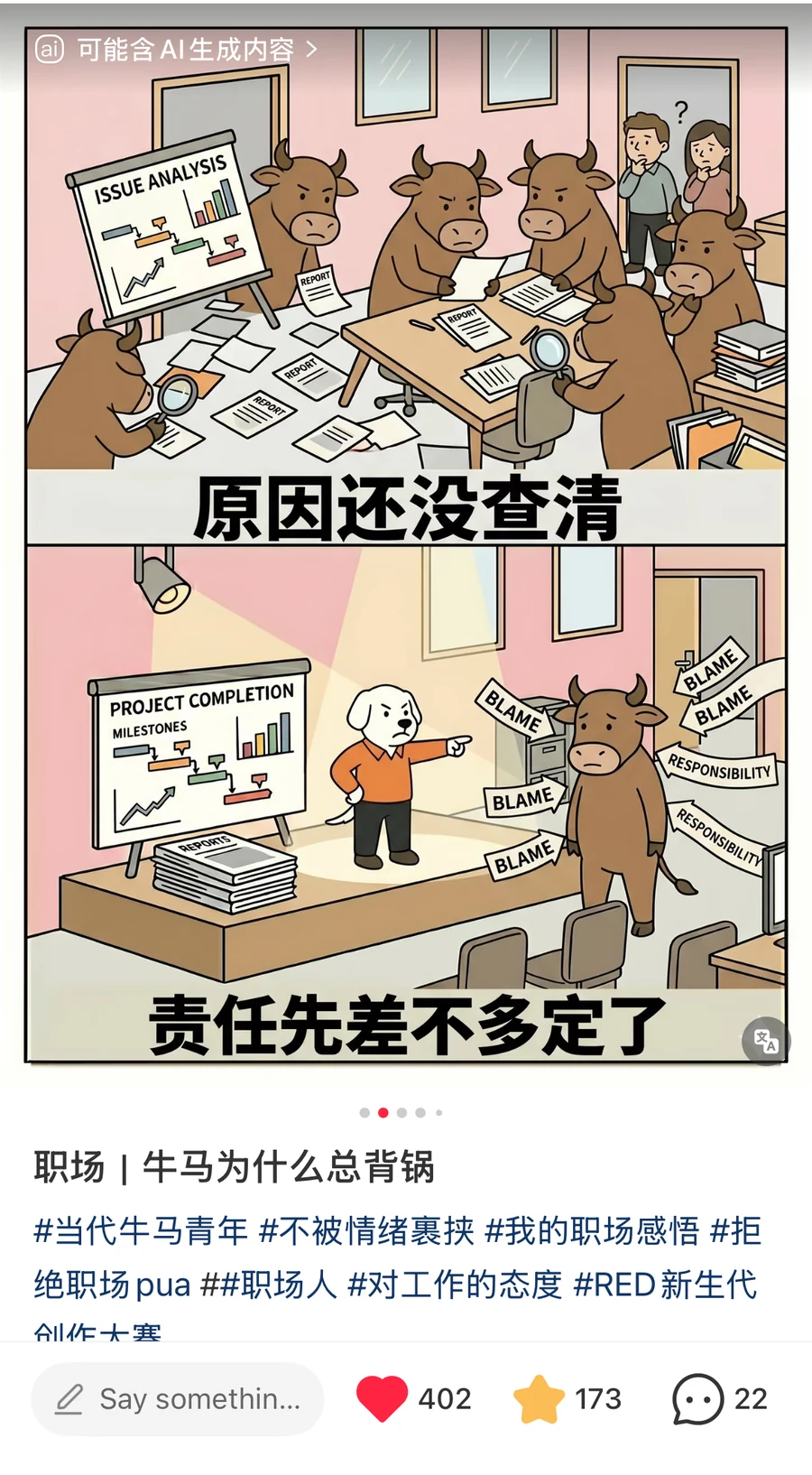
职场|牛马为什么总背锅
“Work | Why human beasts of burden always take the fall.”
The post supplies the workplace default. Its cartoon says the cause is still unknown while the responsible person has basically been chosen. 背锅 is the gap between those two sentences: investigation remains open; assignment has already closed.
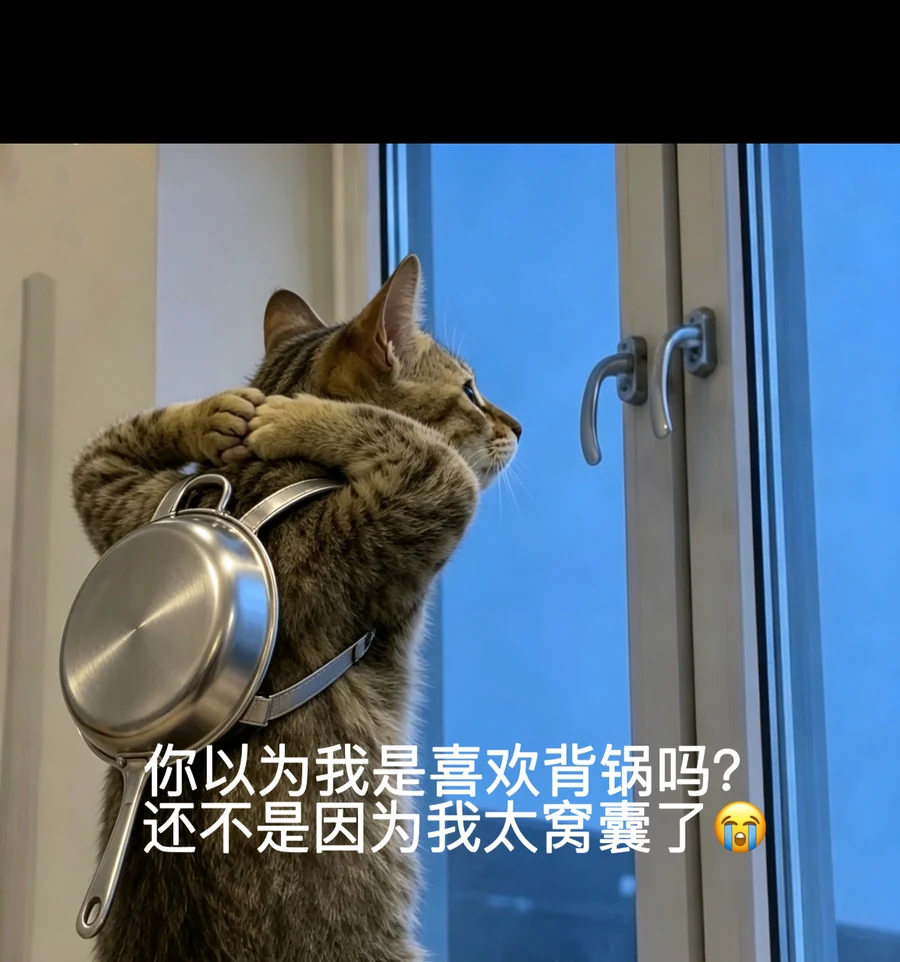
你以为我是喜欢背锅吗?还不是因为我太窝囊了
“You think I carry the wok because I like it? It’s only because I’m such a pushover.”
A circulating meme makes the dead metaphor physical again: the cat is not merely blamed, it is visibly wearing the cookware — which is why the translation keeps the wok instead of the idiom. The second half packs a whole workplace psychology into one word. 窝囊 wōnang is the self-diagnosis of swallowing unfair treatment because you don't dare refuse: nobody straps the wok on the cat; the cat volunteers its back and resents itself for it. With no account context or interaction count in the source image, the entry records neither.
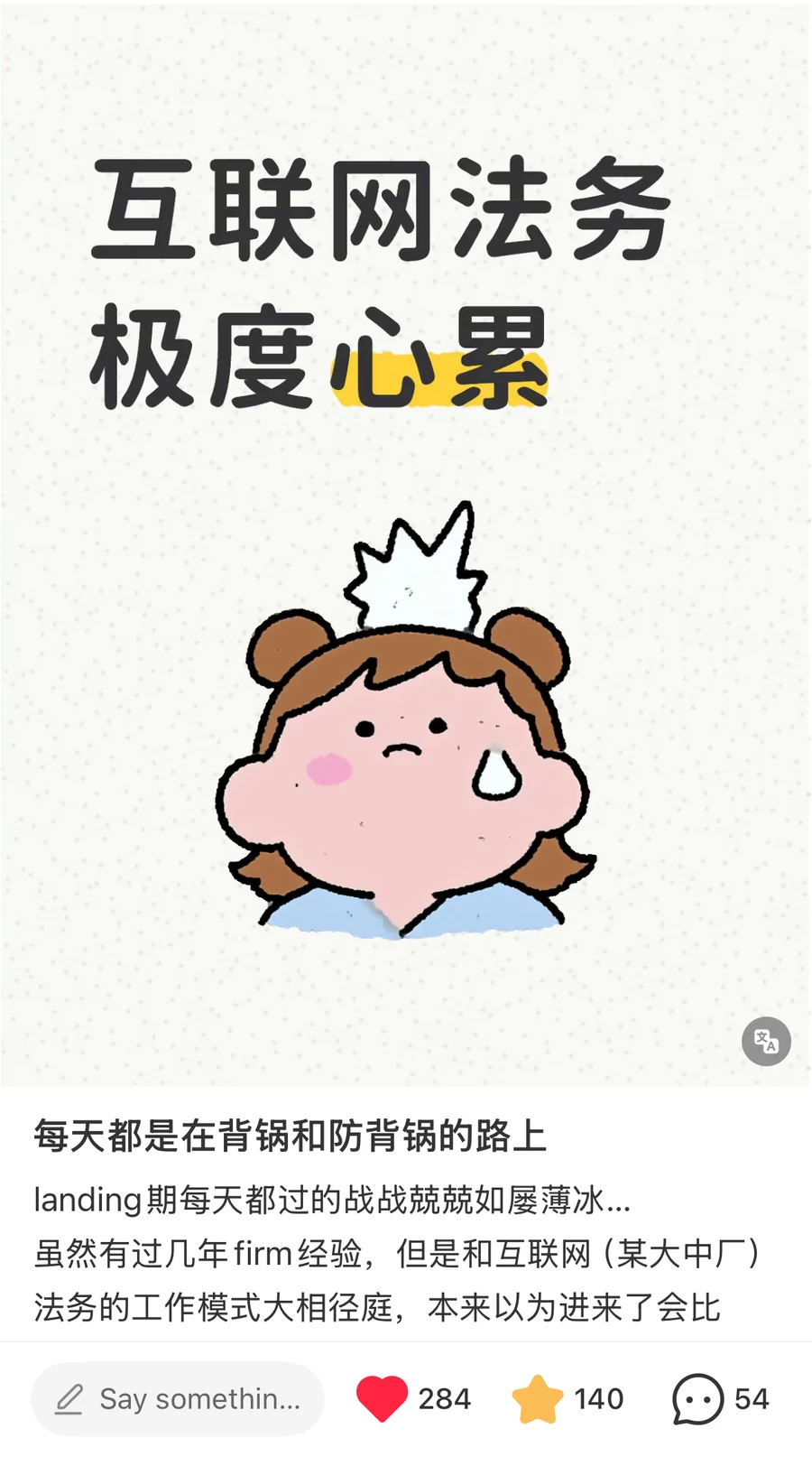
每天都是在背锅和防背锅的路上
“Every day is spent taking the fall — or trying to make sure I don’t.”
The productive form matters. Once 背锅 names the recurring risk, 防背锅 names the defensive labour built around it: documenting decisions, narrowing scope and making sure another person’s failure does not arrive with your name attached.
The word
背锅 means to take the fall: to carry blame, usually for somebody else’s mistake or for a system that needs one person to name.
The phrase does more than say who is responsible. It questions whether that responsibility belongs there. A person 背锅 when the failure is placed on their back and made theirs to carry — sometimes because they are junior, visible, convenient or simply unable to refuse.
That suspicion is why the word thrives at work. An ordinary sentence asks what caused the problem. A 背锅 sentence asks who will be made to absorb it.
How it’s built
背 bēi is the verb to carry on the back; here it is pronounced bēi, not bèi, “the back.” 锅 guō is a pot or wok. The image is therefore exact: cookware strapped to a person who did not necessarily cook the mess.
背锅 is the shortened internet form of 背黑锅 “carry the black pot” — take punishment or blame for another. The shortening drops the black and keeps the object. That leaves 锅 free to act as blame itself: a person can 甩锅 — throw the wok away — while somebody else has to carry it.
The source set also contains the metaphor rendered literally: a cat standing at a window with a frying pan tied across its back. No explanatory text is needed. The grammar has already supplied the illustration.
Where it took off
There is no honest first post to name. Standard dictionaries record the longer 背黑锅 as the idiom for taking another person’s punishment or being blamed without cause. The compact 背锅 became the version most useful to comment sections, games and workplace posts because it can be turned into a whole small system: 背锅 for carrying blame, 甩锅 for throwing it, 背锅侠 for the person habitually chosen, and 防背锅 for the precautions taken in advance.
The important history is therefore not a claimed inventor but a grammatical promotion. The pot stopped being one fixed image inside an idiom and became a movable unit of blame.
How to use it
- Name who benefits: 我又替老板背锅了 “I took the fall for my boss again.” 替 identifies the person whose responsibility has been transferred.
- Refuse 背锅: 这锅我不背 “I’m not taking the fall for this.” The pot has become a stand-alone noun for the blame being offered.
- Describe the defensive work: 每天都在背锅和防背锅 “every day is spent taking the fall and blame-proofing myself.” Documentation, boundaries and copied emails become anti-wok equipment.
In English, take the fall is the best default because it preserves both action and unfairness. British English carry the can is unexpectedly close — another container made into blame — but it changes the object and will not support the Chinese wok jokes.
When it goes wrong
背锅 normally tilts sympathy toward the carrier. If somebody made the mistake and is simply being held responsible, calling that 背锅 quietly rewrites accountability as victimhood. The word is a claim about fairness, not a neutral synonym for receiving criticism.
Nor should a manager casually tell a junior employee to 背锅 as though the line were only office banter. From above, the joke can sound like an instruction: accept the blame because the hierarchy has already chosen the back.
Why it doesn’t translate
Take responsibility is too respectable; it suggests the burden may be deserved. Scapegoat preserves the unfairness but usually names the victim rather than the act. Carry the wok preserves the image and fails as an English idiom. Take the fall is usually closest, but the falling body replaces the kitchen object.
That lost object matters because Chinese keeps using it. The wok can be carried, thrown, refused or defended against. English translates the verdict. 背锅 keeps the prop onstage.
- #000 热搜 “trending, with a hand on the dial”
- #001 momo “the shared alias”
- #002 眼前一黑 “and everything went dark”
- #003 能工智人 “the working sapiens”
- #004 望周知 “please be advised”
- #005 普信男 “so ordinary, so confident”
- #006 负鼠 “the opossum”, and the philosophy that comes with it
- #007 钟馗 China's demon-quelling guardian — a role assembled across ritual, legend, religion, theatre and art
- #008 牛马 human beasts of burden — workers calling themselves oxen and horses
- #009 牛来 Niu Lai — a homemade film title that became a quality test, a chain of puns and, briefly, a living creature
- #011 抽象 so far outside ordinary logic that the wrongness becomes the aesthetic
- #012 来都来了 well, we're already here