Human tokens are finite too. Please be advised.
A joke about running out of tokens by 4pm turned into a costing exercise: overnight refresh, no subscription, use-first-pay-later. Somewhere in the replies the laughter stops — because a human is the cheaper model, and the cheaper model can be made to wait for its wages.
What happened
In late July someone posted a screenshot of themselves messaging a friend, under a caption written in the register of an official memo: 人的 token 也是有限的 望周知 “Human tokens are finite too. Please be advised.”
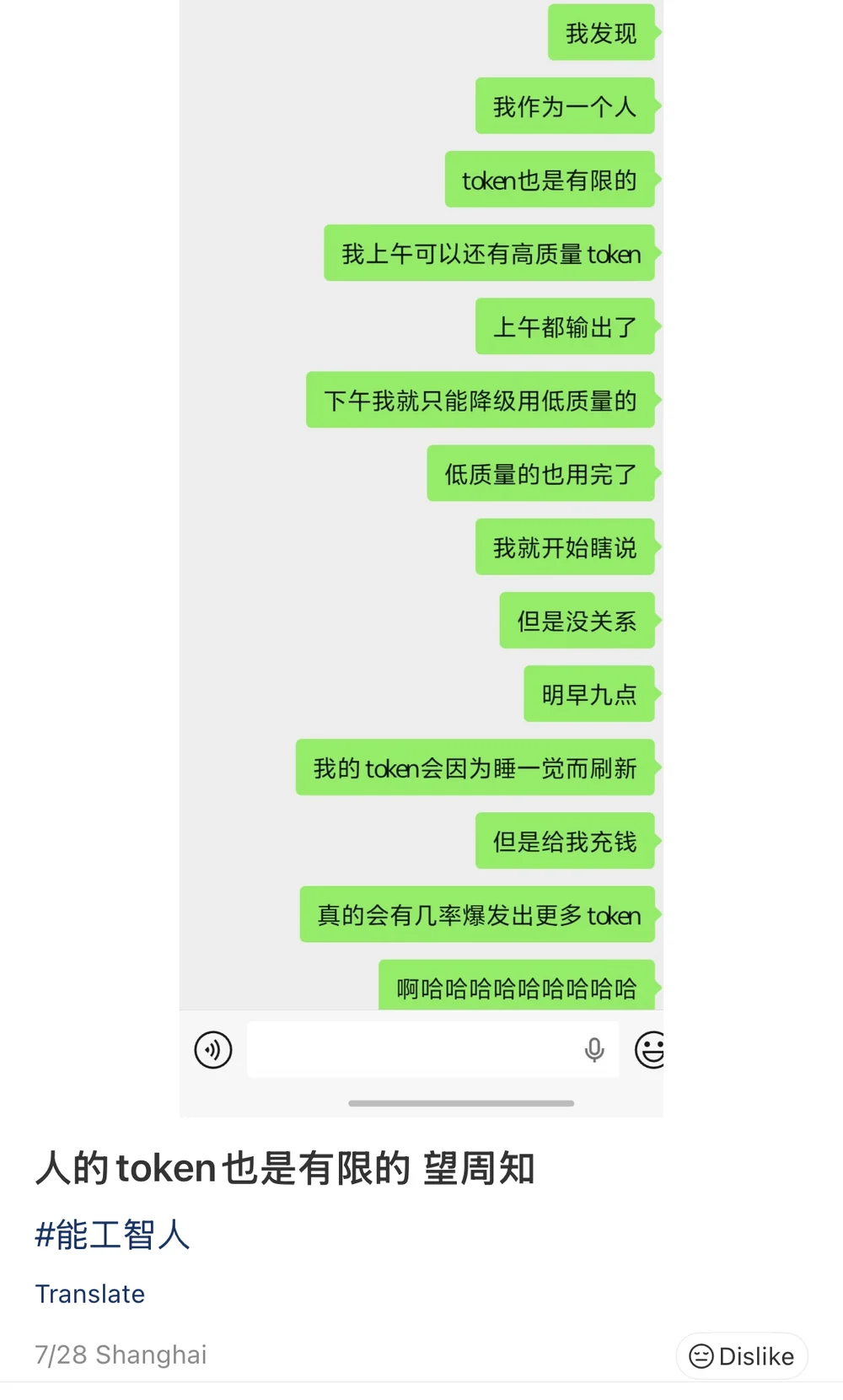
The screenshot is fourteen bubbles fired off one after another, so we’ve kept them that way — one line each, original beside translation:
我发现 So I’ve worked something out
我作为一个人 that as a person
token 也是有限的 my tokens are finite too
我上午可以还有高质量 token In the morning I still have the high-quality tokens
上午都输出了 Spent them all before noon
下午我就只能降级用低质量的 By afternoon I can only downgrade to the low-quality ones
低质量的也用完了 Then the low-quality ones run out too
我就开始瞎说 And I just start making things up
但是没关系 But it’s fine
明早九点 Nine tomorrow morning
我的 token 会因为睡一觉而刷新 my tokens refresh, because I slept
但是给我充钱 Though if you top me up
真的会有几率爆发出更多 token there really is a chance of bursting out more tokens
啊哈哈哈哈哈哈哈哈 ahahahahahahaha
16.9K likes, 2,488 comments, and a hashtag that people are still filing themselves under: #能工智人 the working sapiens — the four characters of 人工智能, artificial intelligence, with the first and last swapped. We gave the word its own entry, because the pun does not survive translation intact: #003 能工智人.
What follows here is not the word. It’s what the comment section did with it.
What they’re saying
The first wave was a costing exercise. Everybody arrived with a price list.
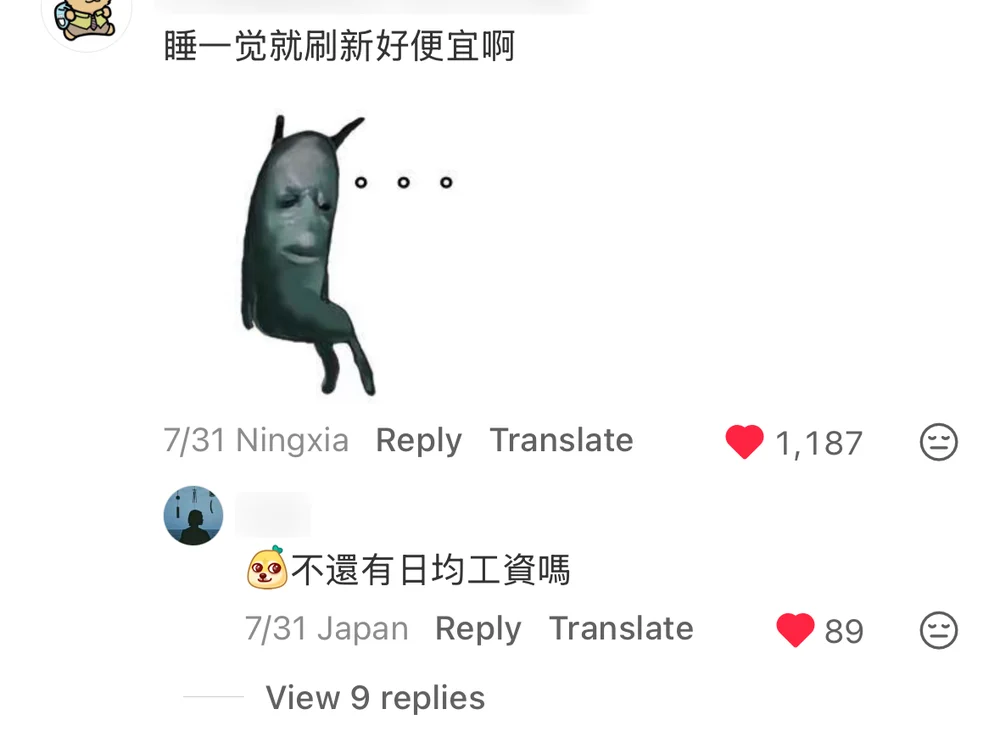
睡一觉就刷新好便宜啊 “Refreshing after a nap? That’s such a steal!” — 1,187 likes, Ningxia
不还有日均工资吗 “Wait — isn’t there also a daily average salary?” — 89 likes
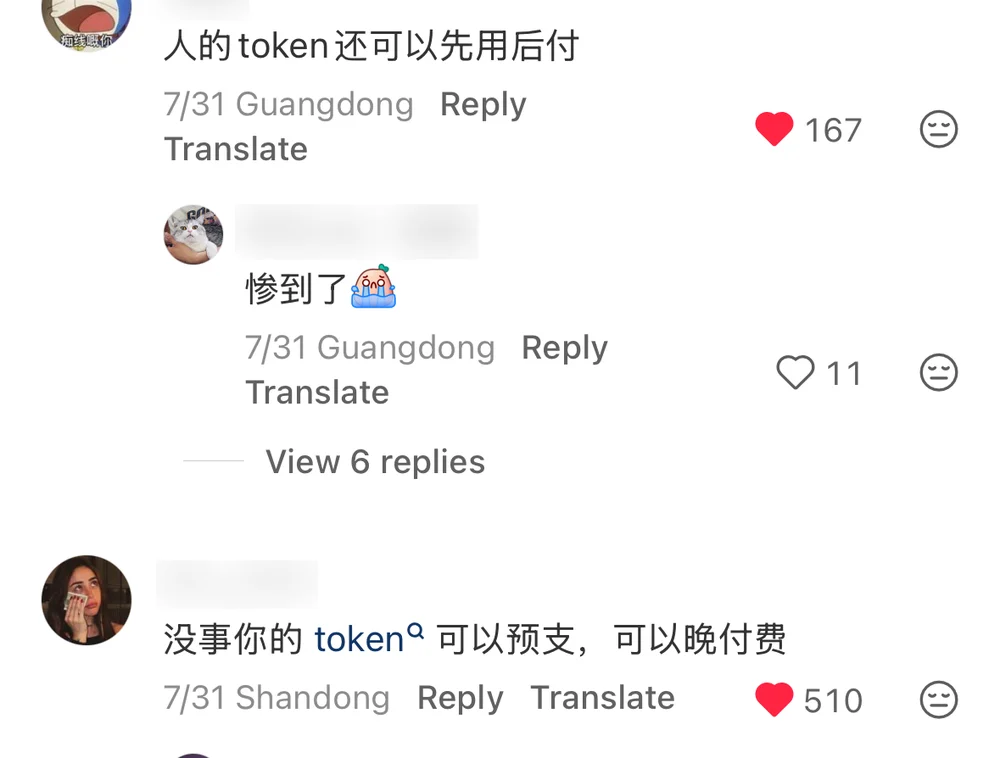
人的 token 还可以先用后付 “Human tokens even come with a use-first-pay-later option.” — 167 likes, Guangdong
没事你的 token 可以预支,可以晚付费 “It’s fine — your tokens can be drawn down in advance, and paid for late.” — 510 likes, Shandong
Read those again as a spec sheet and they stop being funny. Refreshes for free overnight. No subscription. Bills after delivery. Accepts deferred payment.
Someone said it out loud:
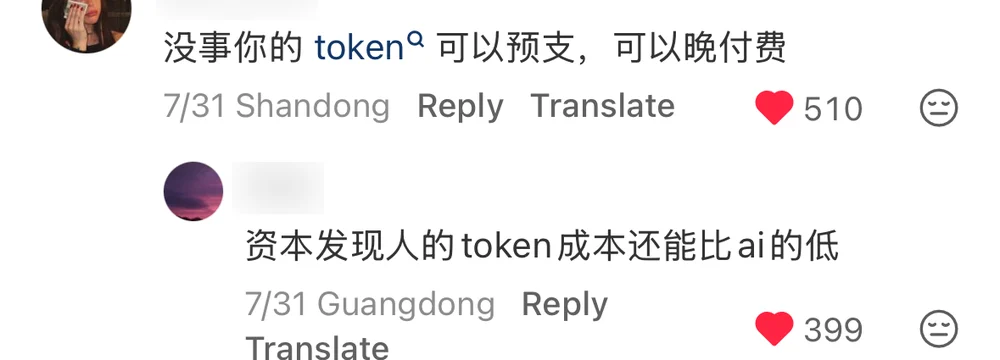
资本发现人的 token 成本还能比 ai 的低 “Capital has discovered that human tokens run cheaper than AI ones.” — 399 likes, Guangdong
From there the thread stops comparing itself to the machine and starts comparing terms of employment with it.
预训练花了 16 年最低,高的 22 年。太狠了。 “Pre-training: sixteen years minimum. Twenty-two at the high end. Brutal.” — 17 likes, Zhejiang
Ai 需要付费才能工作,而牛马们,甚至会倒贴 “AI has to be paid before it works. The human beasts of burden will even pay out of their own pocket.” — 30 likes, Guangdong
牛马累了就不动了,人会给自己灌咖啡 “Real oxen and horses stop when they are tired. Human beasts of burden pour coffee into themselves and keep going.” — 14 likes, Guangdong
That middle line needs one piece of context to land properly, and it is not a metaphor. 牛马 niú mǎ, “ox and horse” — what Chinese workers routinely call themselves: the animal that pulls the cart is said flatly, as a job description. And “will even pay out of their own pocket” is reporting: with graduate hiring this tight, some students pay agencies for an internship placement at a name-brand firm. Paying to work is a market, not a punchline.
The last advantage gets audited too:
ai 不接受画饼和延迟满足,人可以……拖欠工资也可以 “AI won’t accept a promise of jam tomorrow. Humans will. You can also just not pay them.” — 215 likes, Guangdong
Note who is doing the drawing in that last one. The Chinese names no subject, which is how the sentence gets its shrug: your tokens can be drawn down early and can be settled late — by whoever is holding them. Not a credit line you were granted. A credit line taken against you.
画饼 huà bǐng, “drawing a pancake” — the manager’s vision of future reward, served instead of one. A server cannot be paid in pancakes. Wage arrears, meanwhile, are common enough in China to have a plain everyday name — which is why “you can also just not pay them” reads as observation rather than exaggeration.
What I see
The funniest material in the thread is also the most clinical: hundreds of people describing, in the vocabulary of inference costs, the hour their brain stops working.

每天四点我都在办公室对同事说 我的英语用完了 “Every day at 4pm I announce to my colleagues that I’ve run out of English.” — 8 likes, United States
我每天下午四点开始就有点听不懂人话了,就是感觉能量用完了,脑子转不过来 “From 4pm I stop being able to parse human speech. The energy bar is empty and the brain won’t turn over.” — 3 likes, Guangdong
Nobody in these 2,488 comments is afraid of being replaced. That’s the part worth sitting with. The fear isn’t obsolescence — it’s the discovery that you are already priced, that the price is roughly two coffees and three meals, and that the thing you are being compared against negotiates better than you do. It gets paid up front. It refuses pancakes. It stops when it’s tired.
And then this, from a commenter in Jiangsu, with one like:
“Which is why I keep thinking I don’t work hard enough — I so rarely feel used to my limit. Only when I’m working with AI, drafting with it, judging with it, building alongside it, does my head start to ache: there’s too much to learn. The rest of the time, studying or working, I’ve never felt a thing.”
A metaphor borrowed for a joke in July has become, by August, the unit people measure their own worth in. The machine bills by the token. You bill by the day, and throw in the overtime.
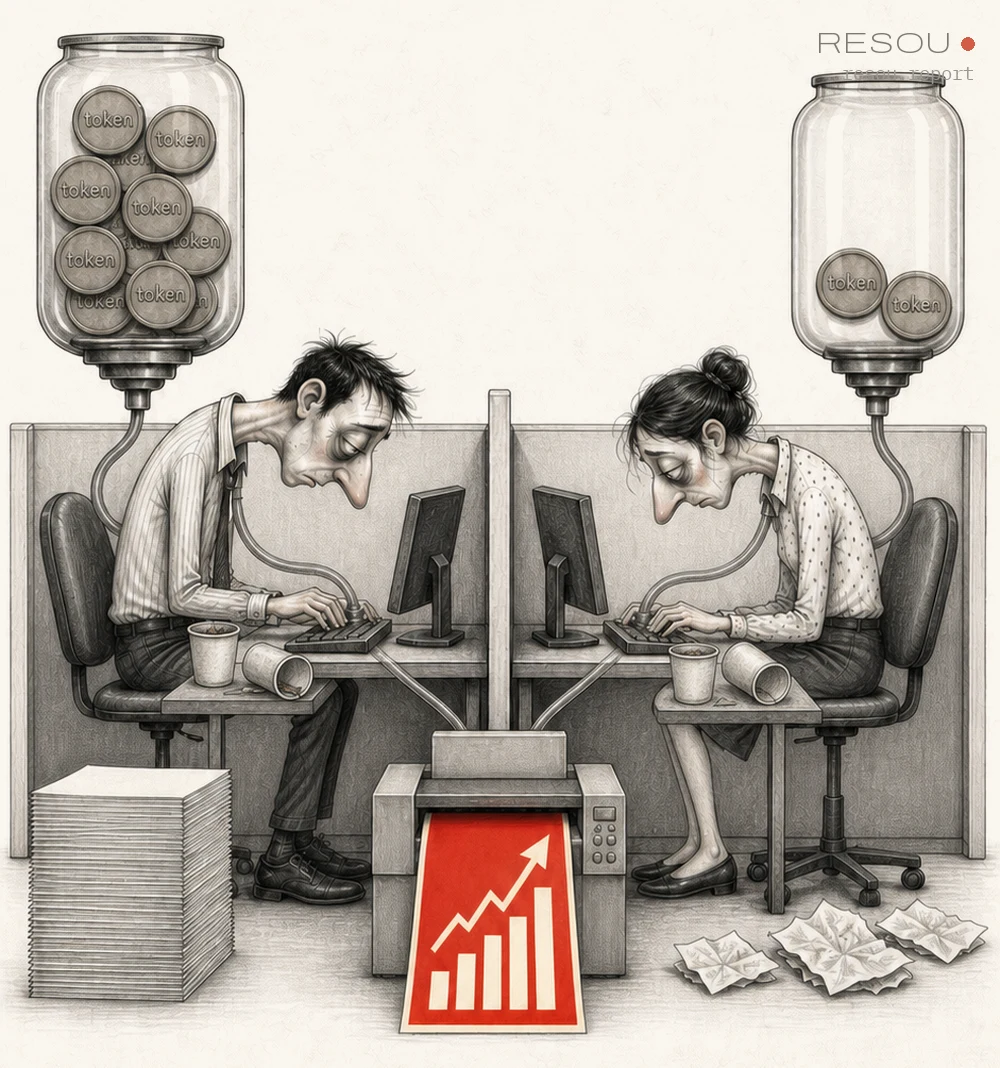
Sixteen years of pre-training. Your afternoon rate is two coffees.
下次热搜见 — see you at the next hot search