Nobody Can Explain China’s Opossum Meme. Everyone Gets It.
Nobody in the two viral posts could explain where the animal came from. That did not stop them from recognizing it immediately: tired, politely defeated, and already composing the excuse. Then the comment section began writing new ones.
What happened
One photograph reached the Chinese internet: an opossum standing upright at a window, its paws folded behind its back, looking as if it had been called into a meeting and decided to wait for the meeting to apologize first.
Nobody seems to know where the photograph came from. Neither, strictly speaking, does China: there are no wild opossums in the country. They are native to the Americas — a photograph of a foreign animal, in a place that has none, standing in for how the day went. This was not an obstacle.
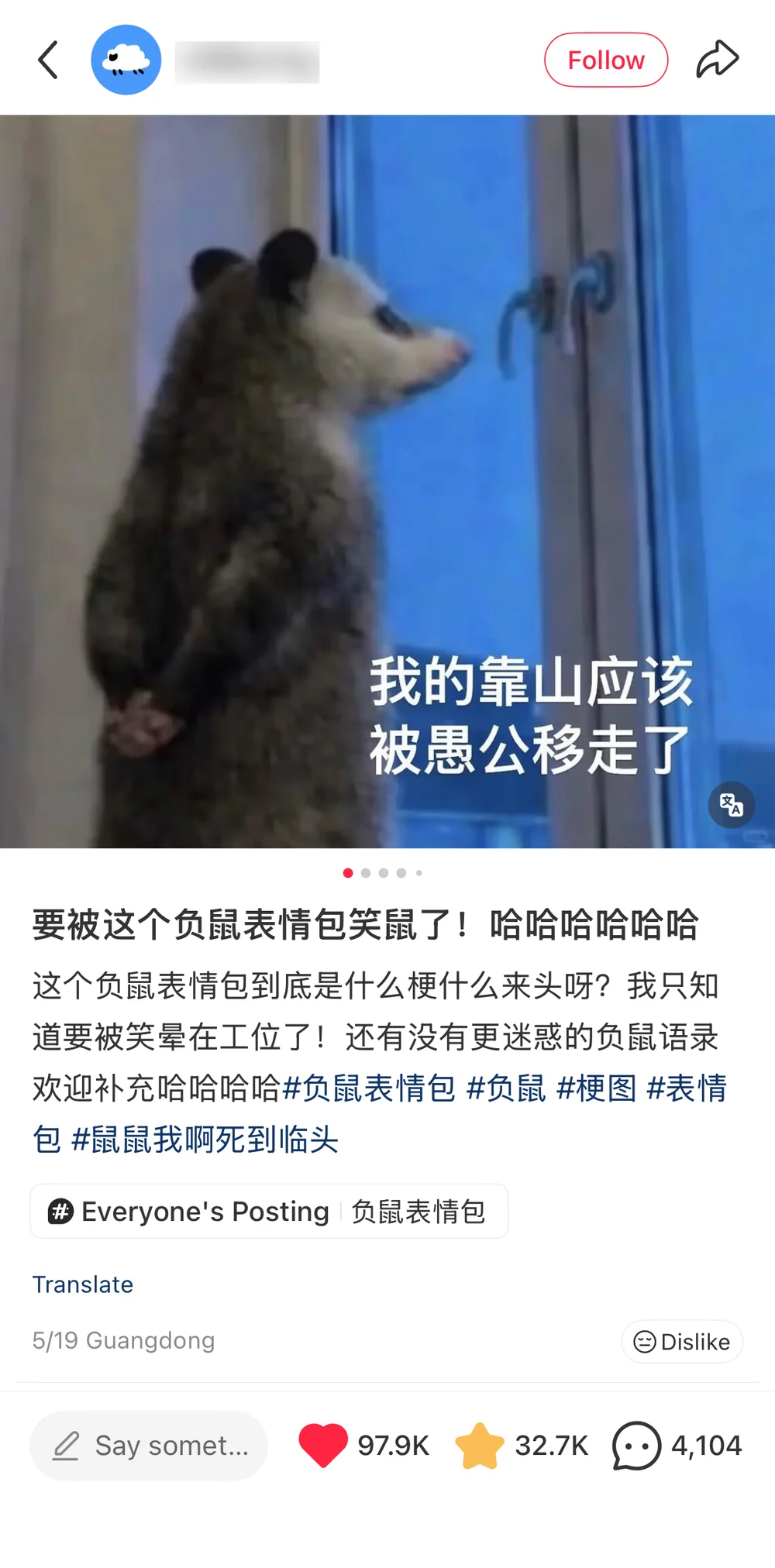
要被这个负鼠表情包笑鼠了!这个负鼠表情包到底是什么梗什么来头呀?我只知道要被笑晕在工位了!还有没有更迷惑的负鼠语录,欢迎补充。 “This possum meme is killing me. What even is it, and where did it come from? All I know is I’m about to pass out laughing at my desk. Got any more deranged possum quotes? Drop them below.” — 97.9K likes · 4,104 comments · Guangdong
The post is asking for an explanation while proving that an explanation is no longer necessary. A second collection was even larger:
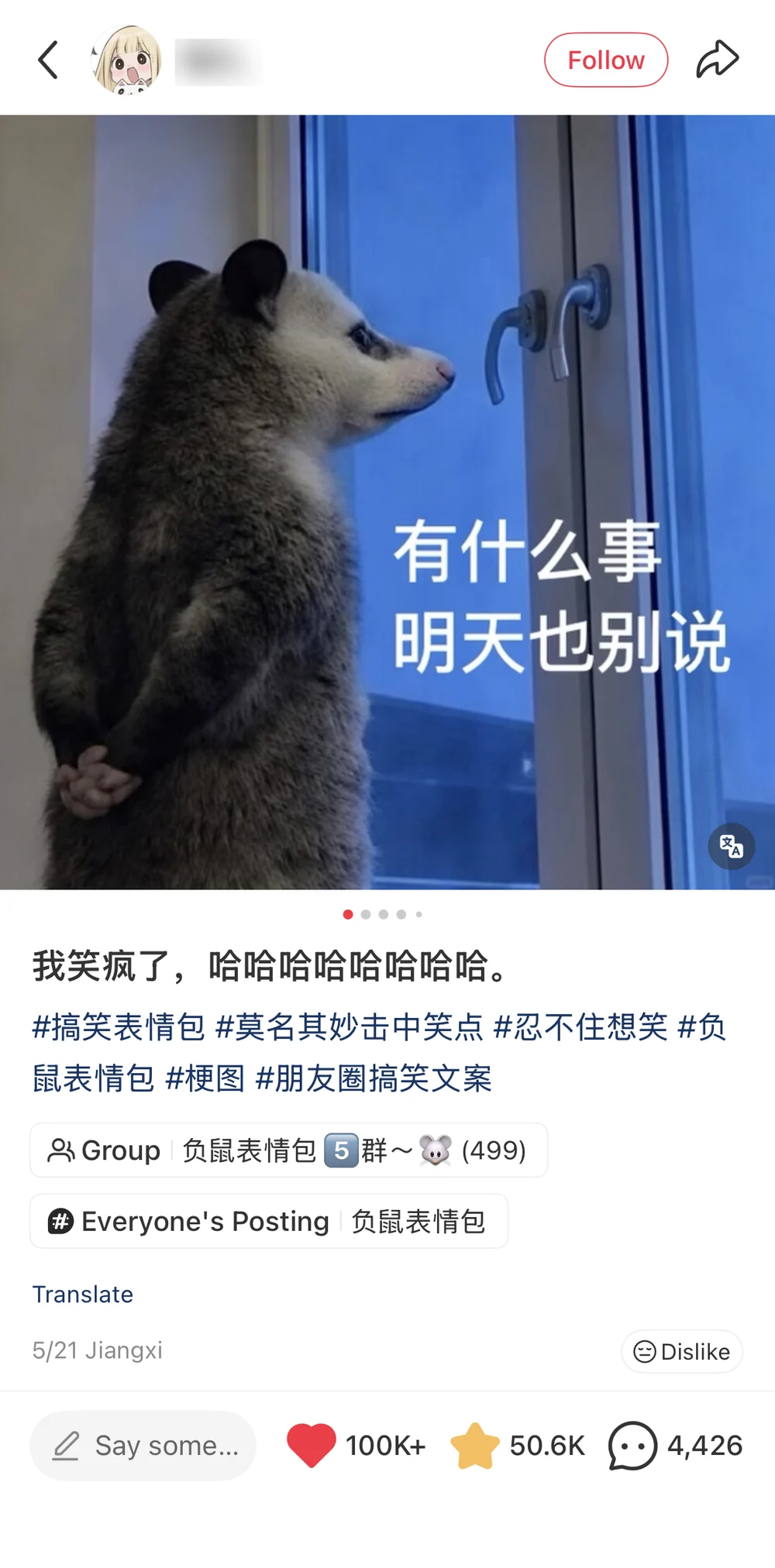
有什么事,明天也别说。 “Whatever it is, don’t tell me tomorrow either.” — 100K+ likes · 50.6K saves · 4,426 comments · Jiangxi
Underneath it is a link to 负鼠表情包 5 群 “Opossum Meme Group No. 5”, already at 499 members. There had been enough demand for four previous groups before anyone had settled the question of what the animal was doing there.
We have a separate dictionary entry for 负鼠 — the animal, the word, and the mechanics of the meme. This is the field collection: the captions people circulated, then the ones the comment section made for itself.
What they’re saying
The voice is consistent. It is not rebellion. Rebellion requires energy. The opossum offers advance notice that it will fail, phrased with the courtesy of someone who has already filled in the form.
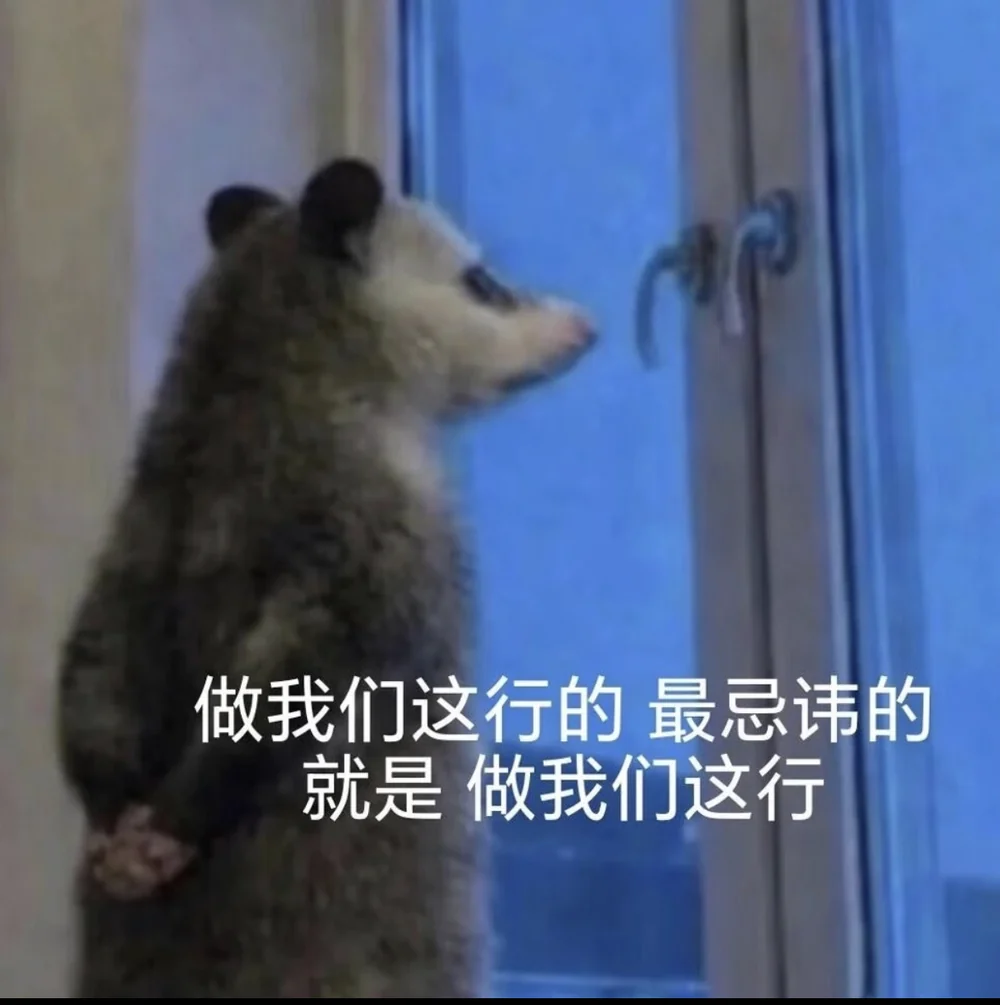
做我们这行的,最忌讳的就是做我们这行。 “Rule number one of this job: don’t have this job.”
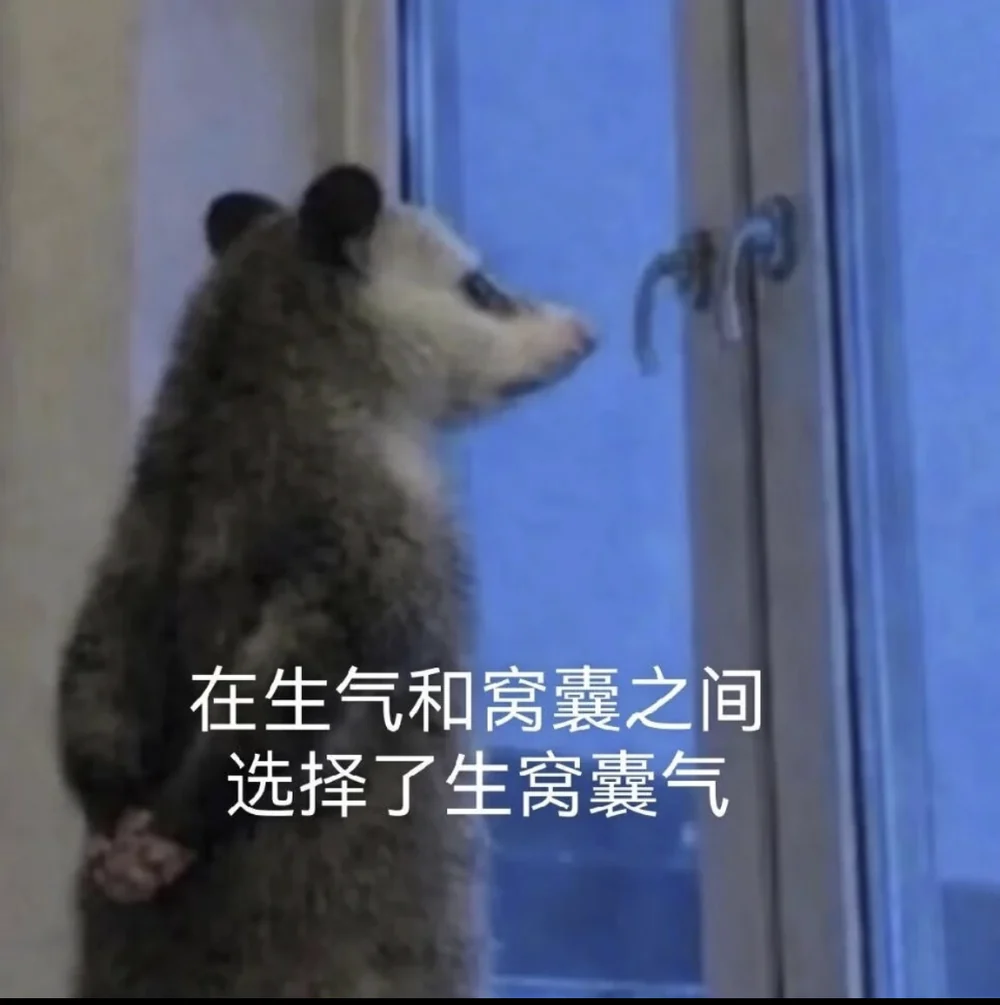
在生气和窝囊之间,选择了生窝囊气。 “Torn between getting mad and taking it like a bitch, so I did both.”
生气 shēng qì means to get angry; 窝囊 wō nang means spineless. Put them together and Chinese already has 生窝囊气 shēng wō nang qì: the anger you feel when you have no power to do anything about it. The third option is not a compromise. It is both, and worse.
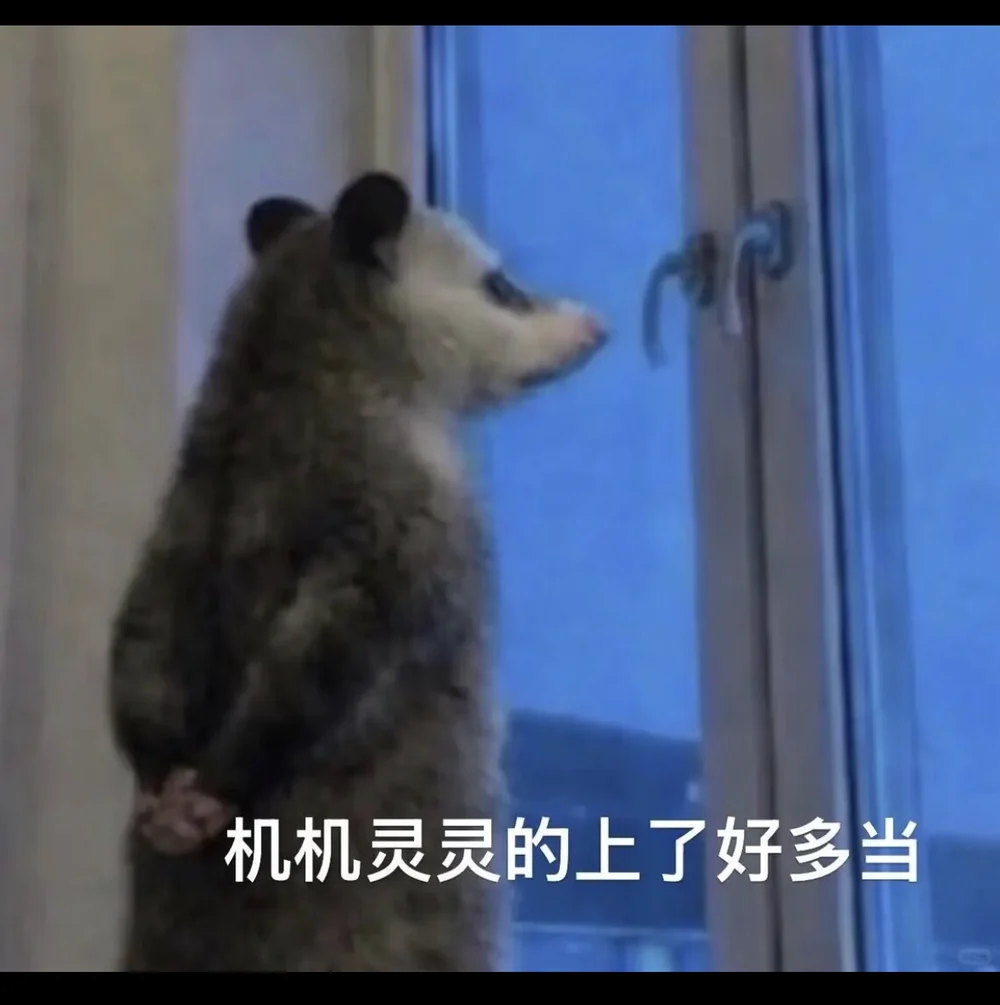
机机灵灵的,上了好多当。 “All this intelligence just to keep falling for the same shit.”
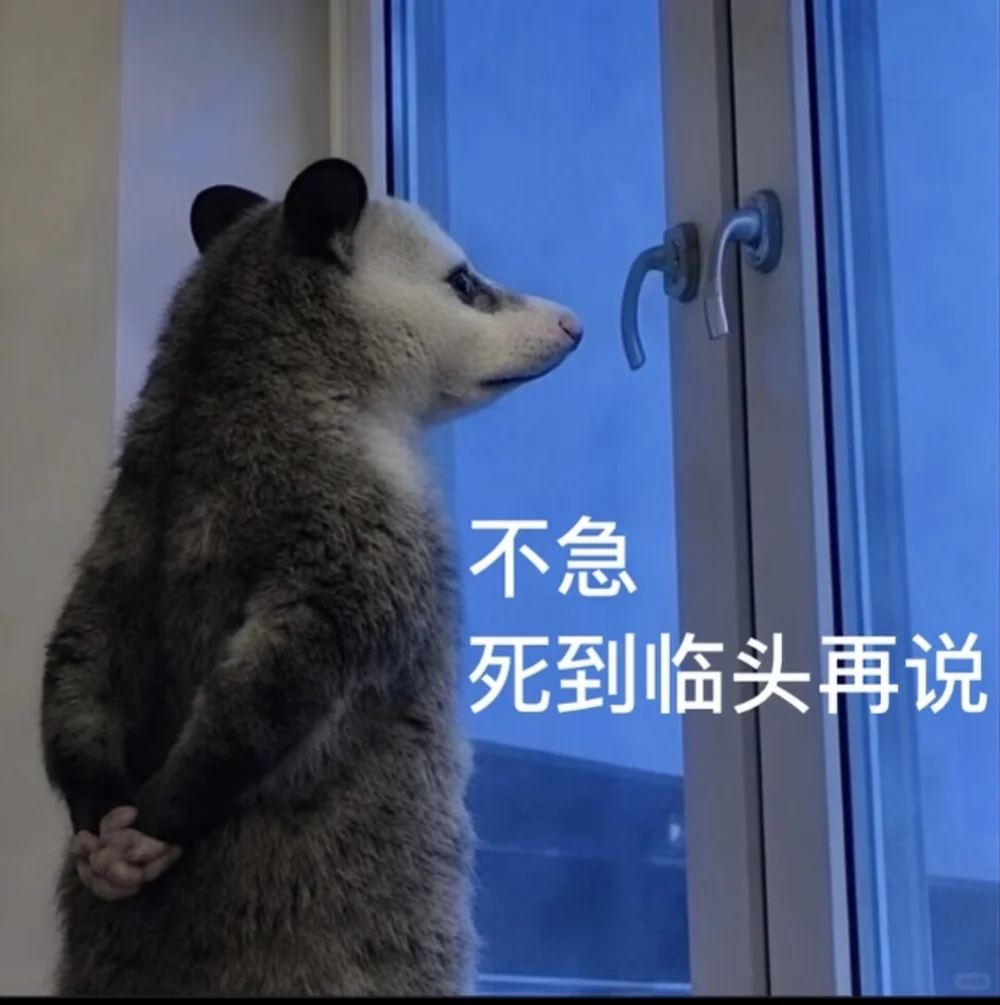
不急,死到临头再说。 “No rush. I’ll deal with it once it’s fatal.”
死到临头 sǐ dào lín tóu, literally death already at the door, is normally an accusation aimed at somebody still refusing to see disaster coming. Here it has been reassigned as a scheduling option.
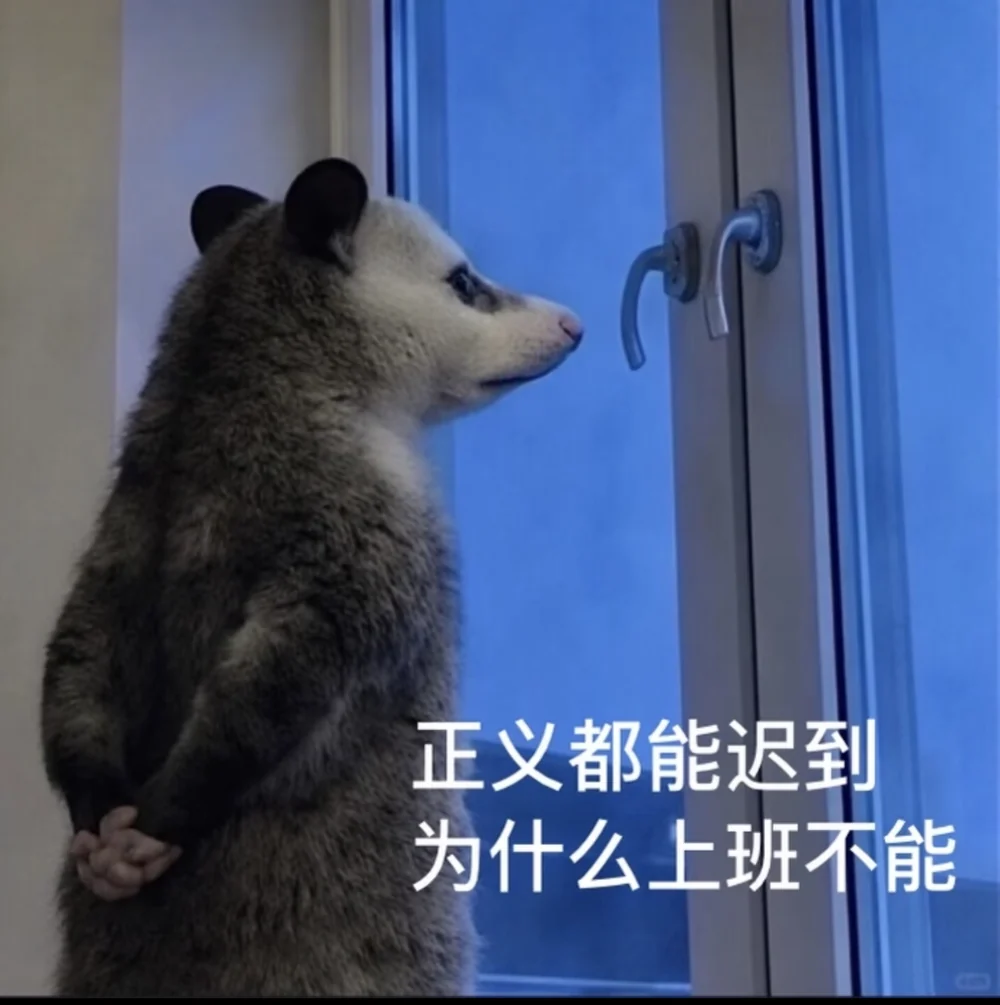
正义都能迟到,为什么上班不能。 “Justice gets to arrive late. Why doesn’t my shift?”
The borrowed line is 正义也许会迟到,但不会缺席 — justice may arrive late, but it will not fail to arrive, a standard consolation under Chinese court-case news. The opossum files it as an attendance policy.
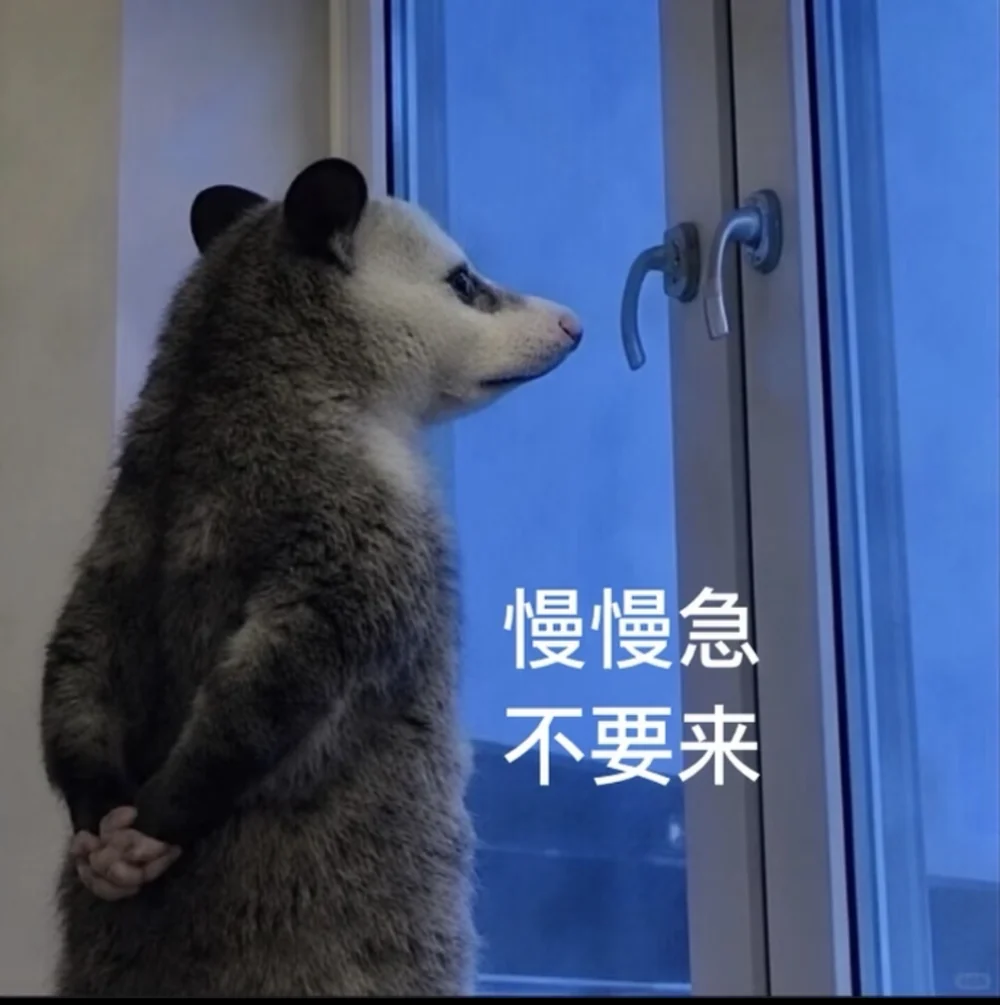
慢慢急,不要来。 “Panic slowly. And don’t come over.”
The reassuring phrase is 慢慢来,不要急 màn màn lái, bú yào jí — take your time, don’t panic. Swap the final character of each half and comfort becomes two instructions nobody asked for.
That is one half of the genre: familiar language with one component put back in the wrong socket. The other half needs no explanation at all.
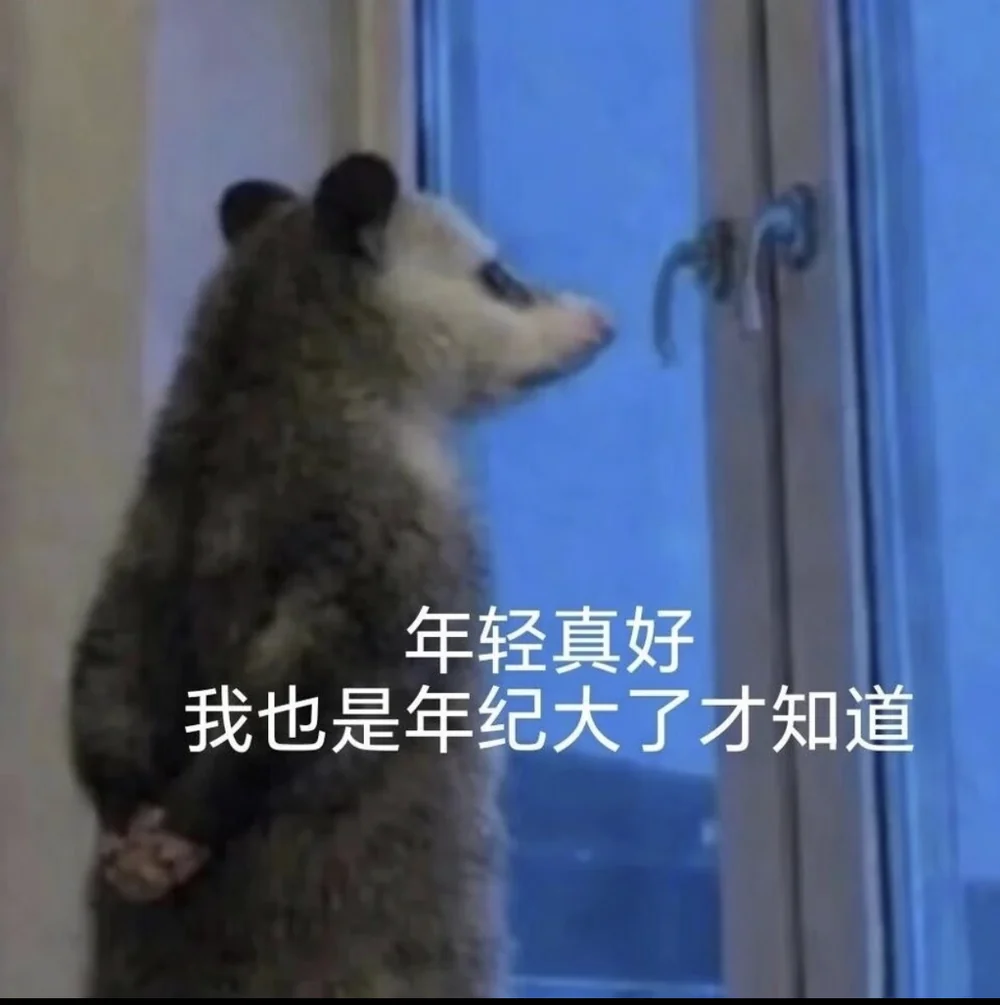
年轻真好,我也是年纪大了才知道。 “Being young is great. Took me getting old to realize that.”
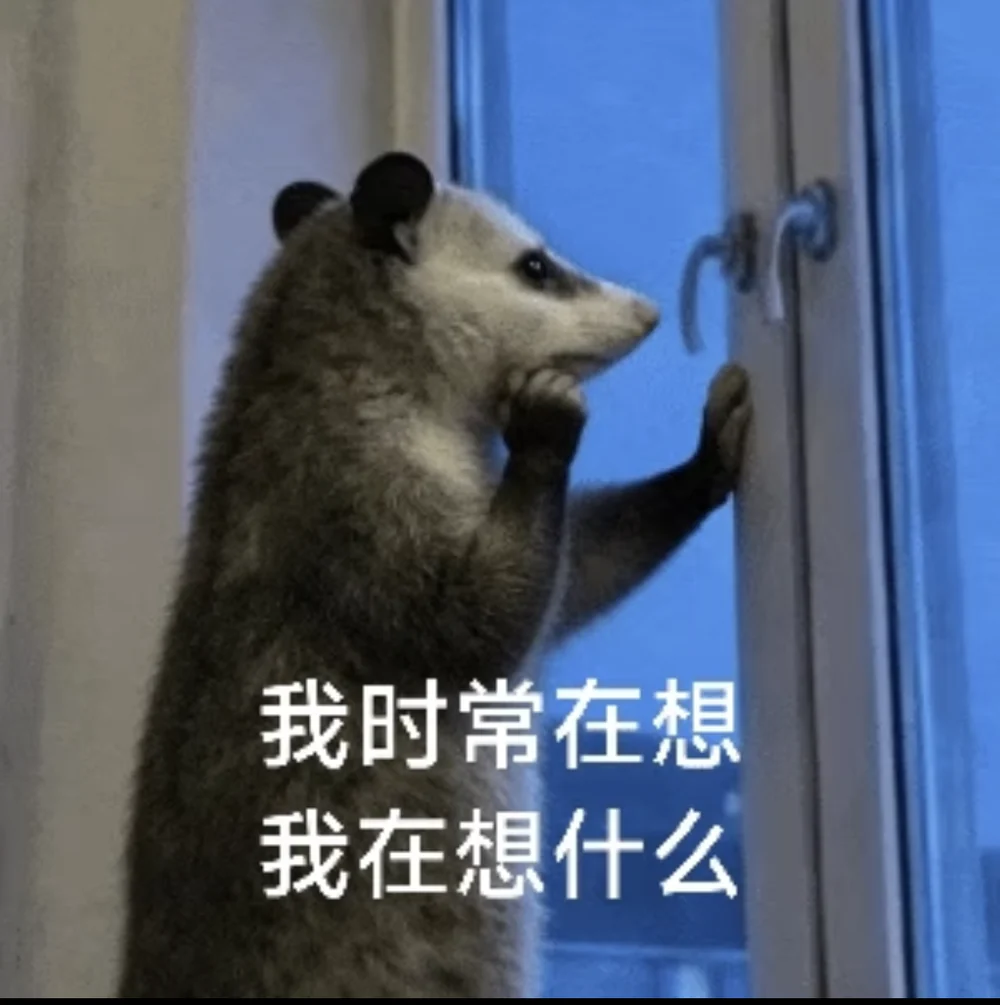
我时常在想,我在想什么。 “Thinking about what I’m thinking about.”
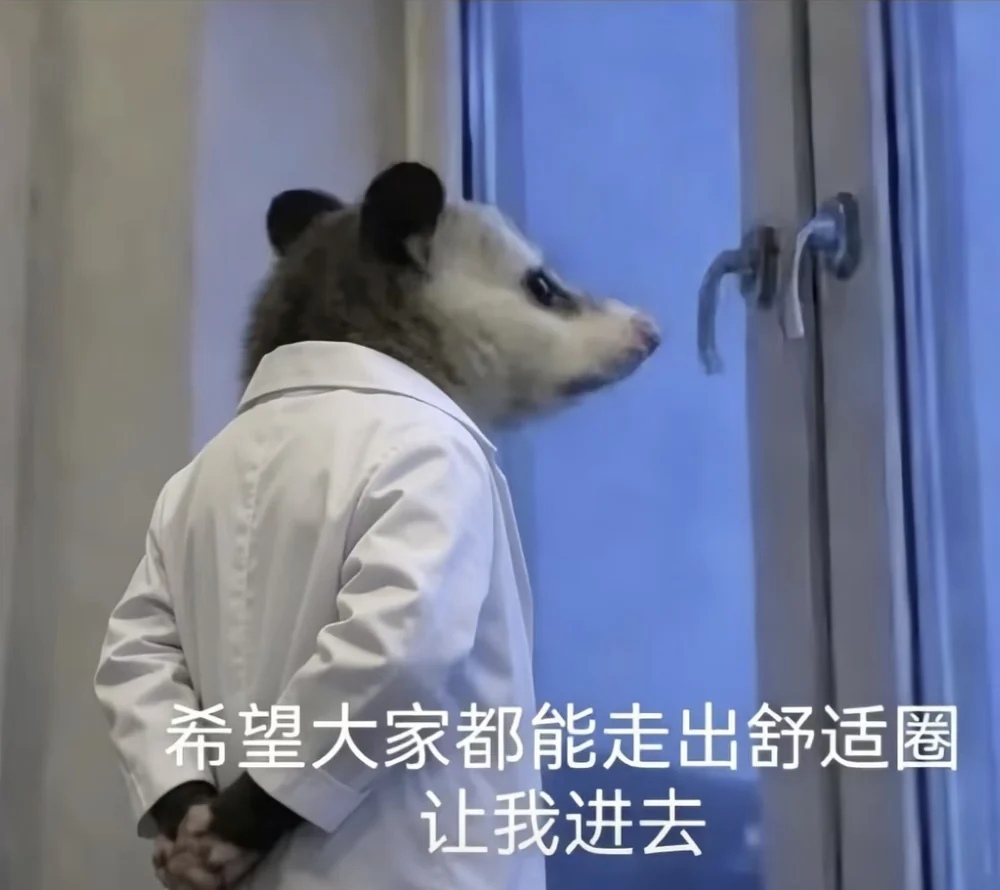
希望大家都能走出舒适圈,让我进去。 “Please step out of your comfort zone. I would like to move in.”
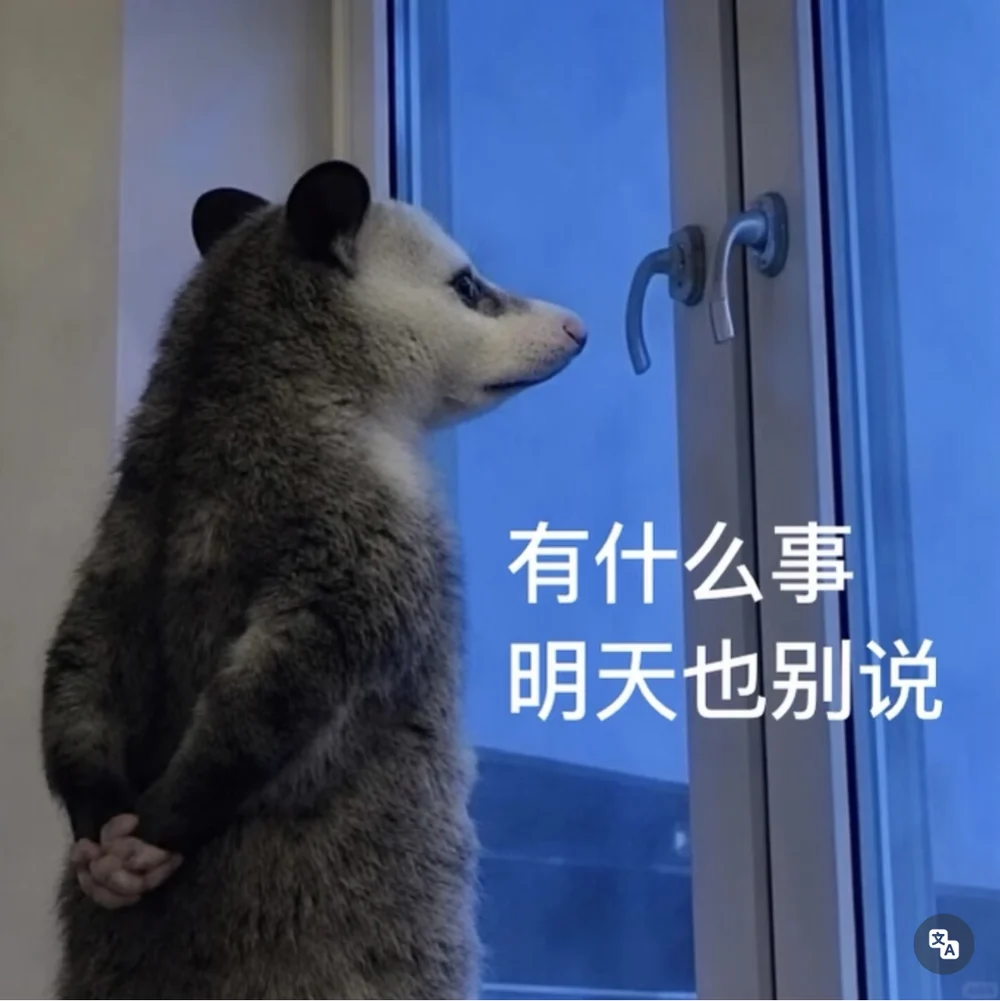
有什么事,明天也别说。 “Whatever it is, don’t tell me tomorrow either.”
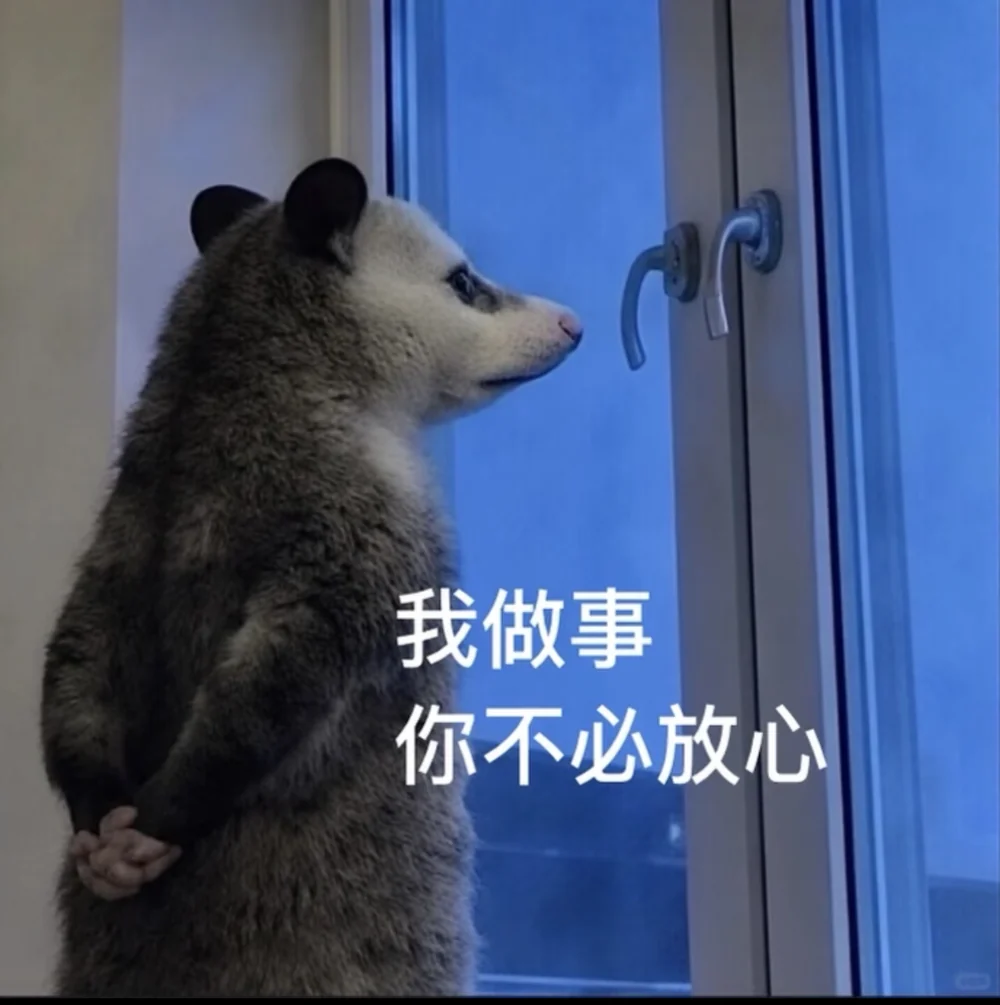
我做事,你不必放心。 “I’ll take care of it. Please do not feel reassured.”
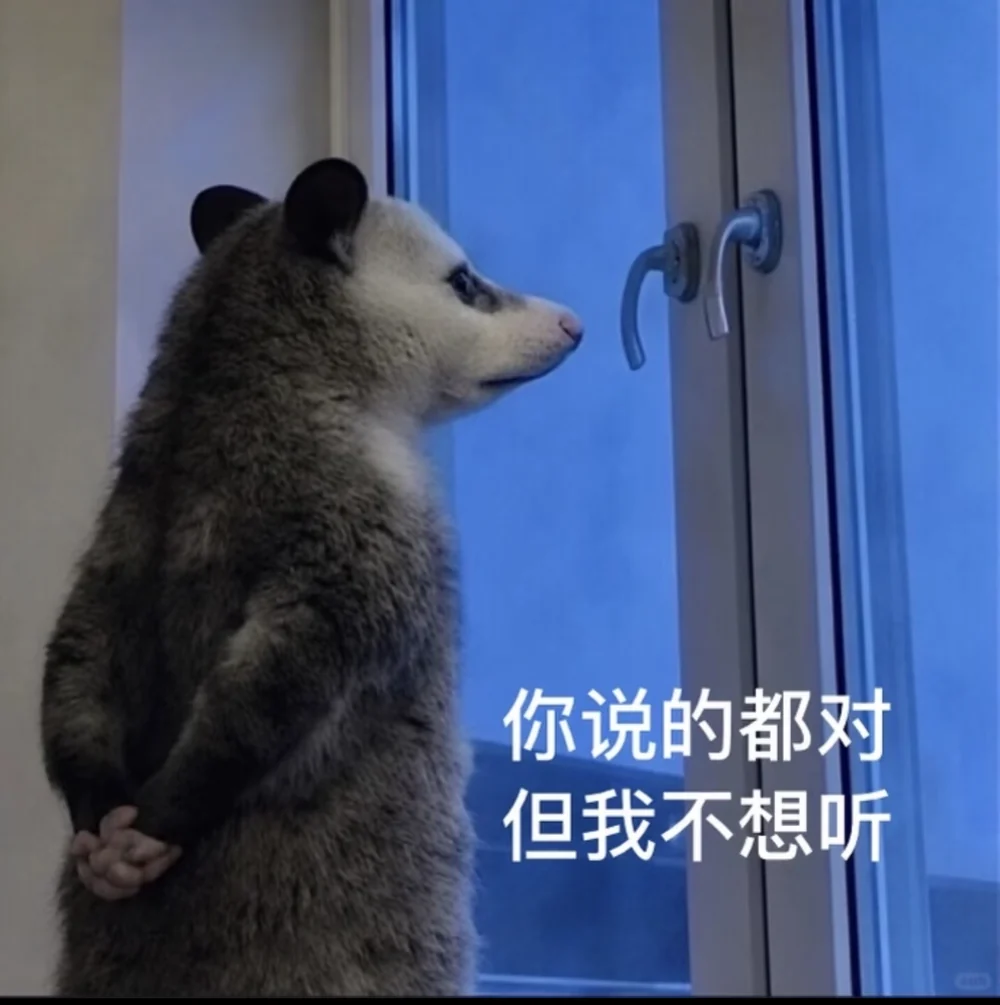
你说的都对,但我不想听。 “You’re completely right. I don’t want to hear it.”
The more elaborate captions survive by taking Chinese literally.
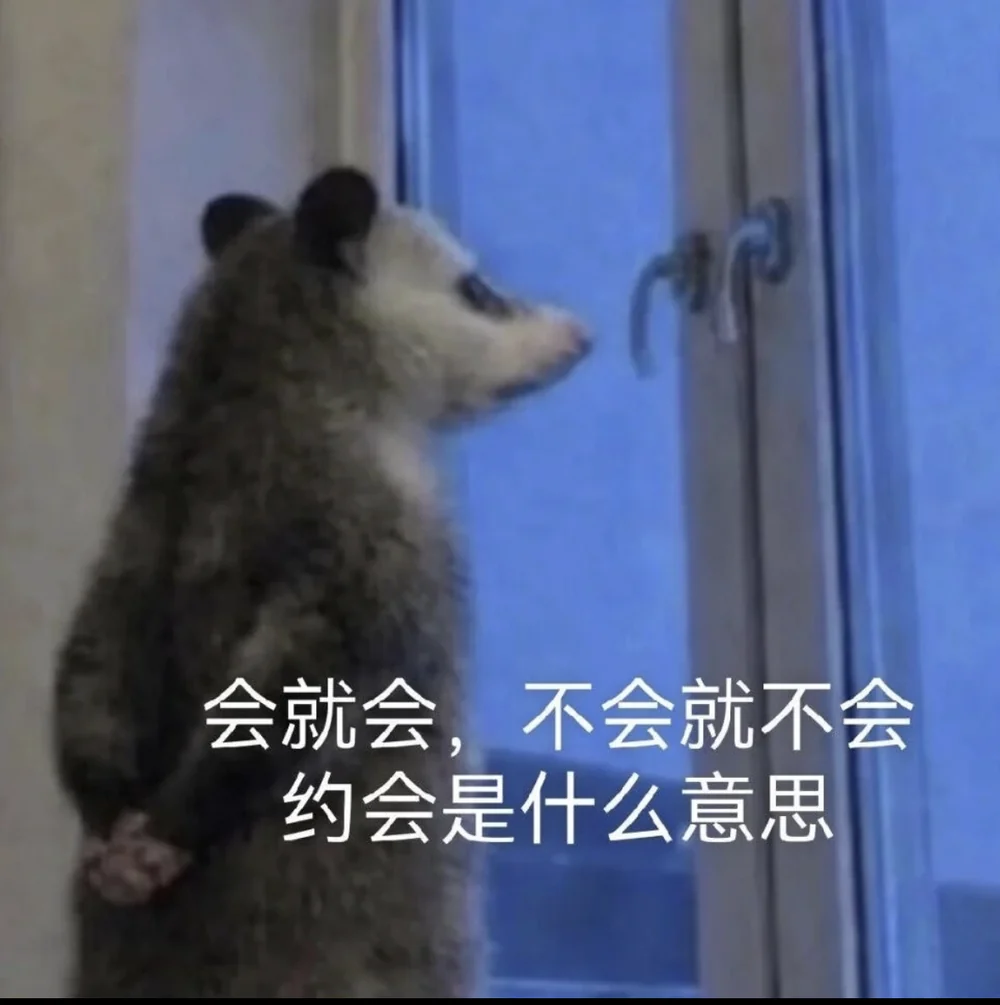
会就会,不会就不会,约会是什么意思。 “Either you can or you can’t. So what exactly is this thing called ‘approximately can’?”
约会 yuē huì means a date. Read one character at a time, however, 约 is approximately and 会 is can. The opossum would like a decision.
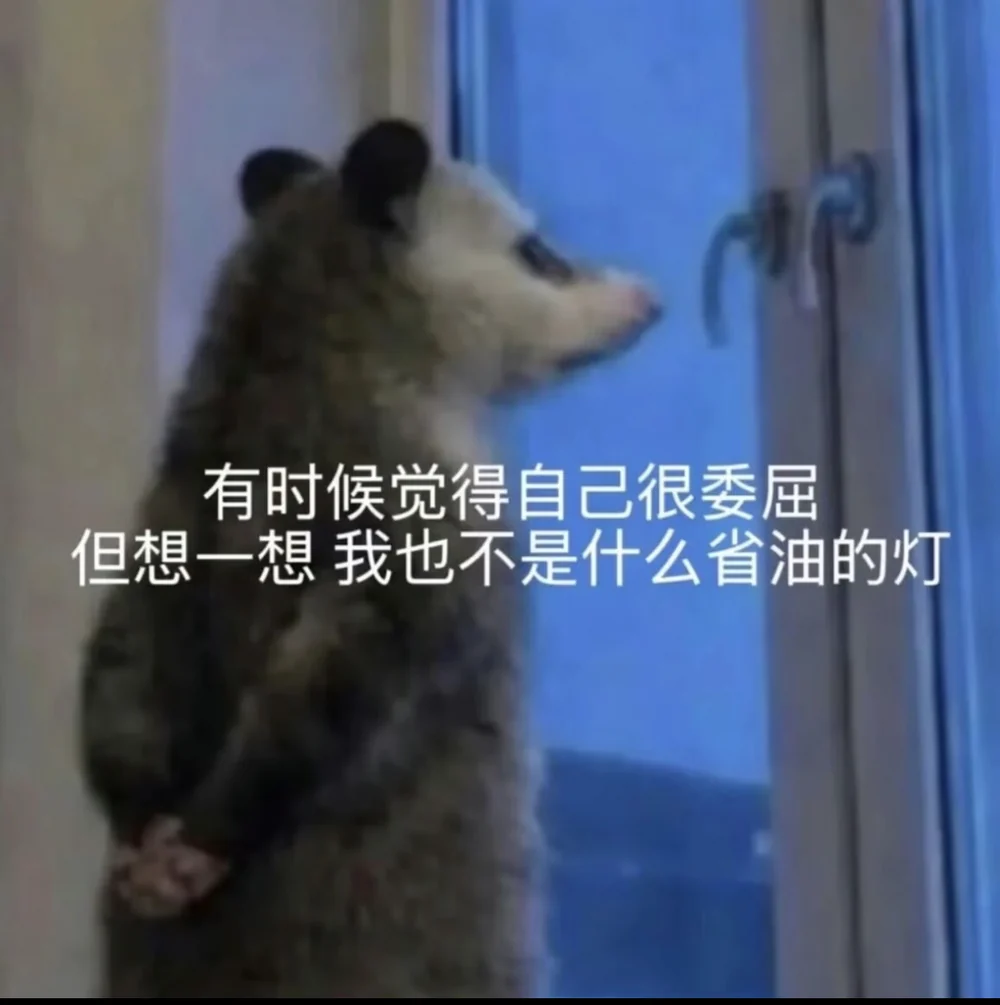
有时候觉得自己很委屈,但想一想,我也不是什么省油的灯。 “Sometimes I feel like I’ve been wronged. Then I remember I’m also a fucking nightmare.”
不是省油的灯 bú shì shěng yóu de dēng, literally not a lamp that saves oil, is the standard idiom for someone difficult, costly, or no pushover. The caption grants the complaint and enters a character reference against itself.
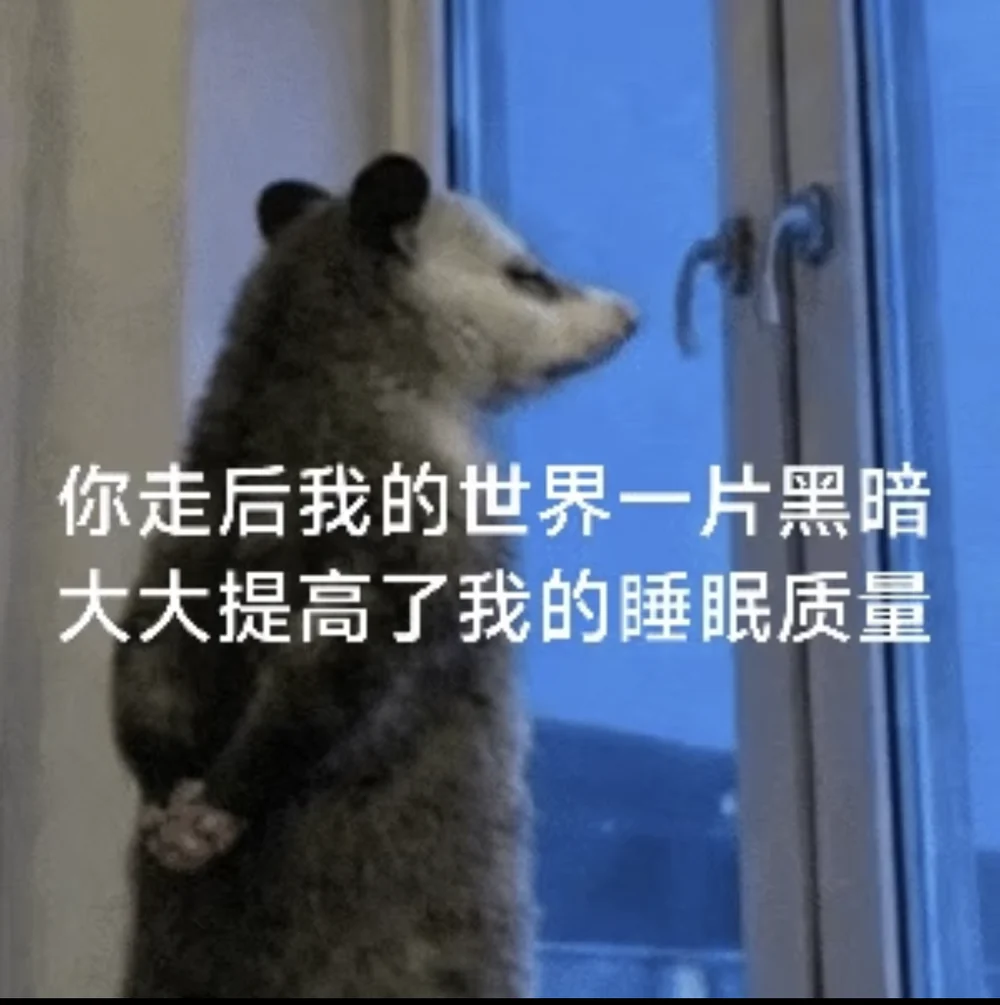
你走后我的世界一片黑暗,大大提高了我的睡眠质量。 “When you left, my whole world went dark. I’ve been sleeping great ever since.”
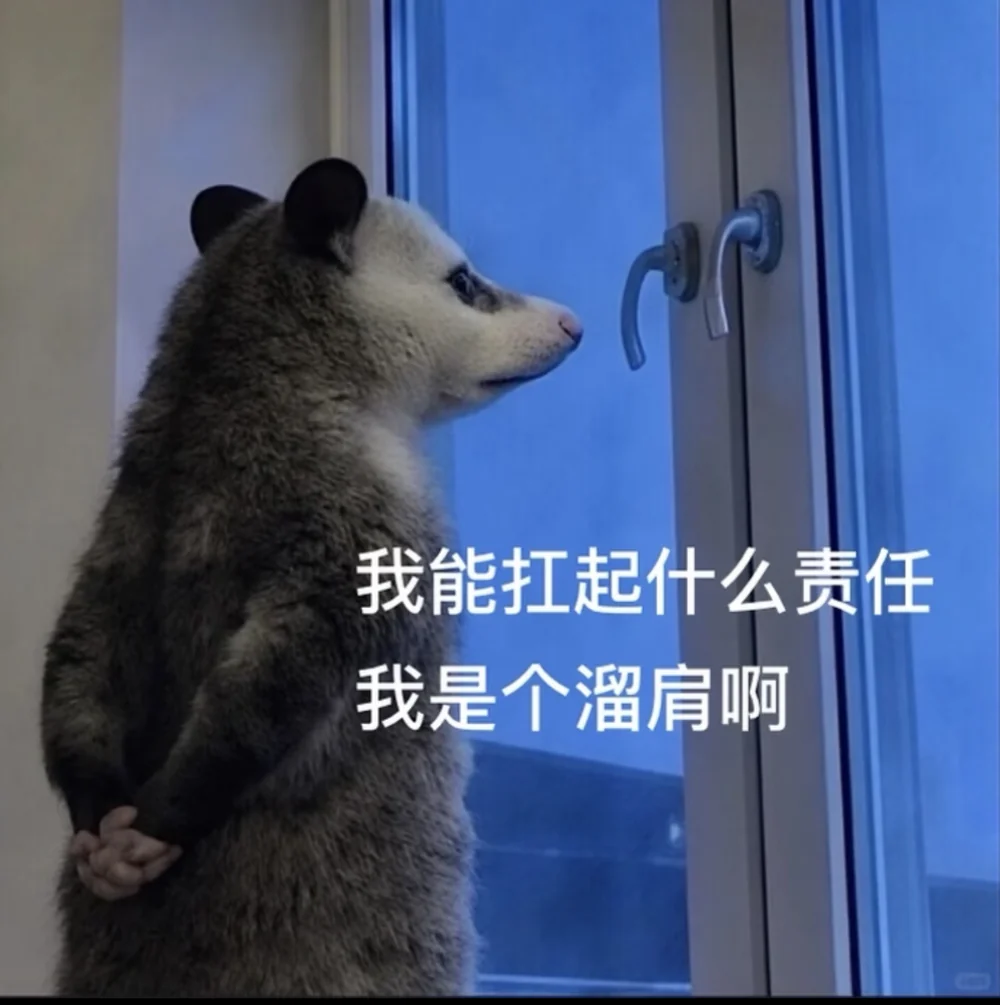
我能扛起什么责任,我是个溜肩啊。 “How am I supposed to shoulder responsibility? My shoulders slope.”
This one crosses unusually cleanly: responsibility sits on the shoulders in both languages, and the animal has brought anatomical documentation.
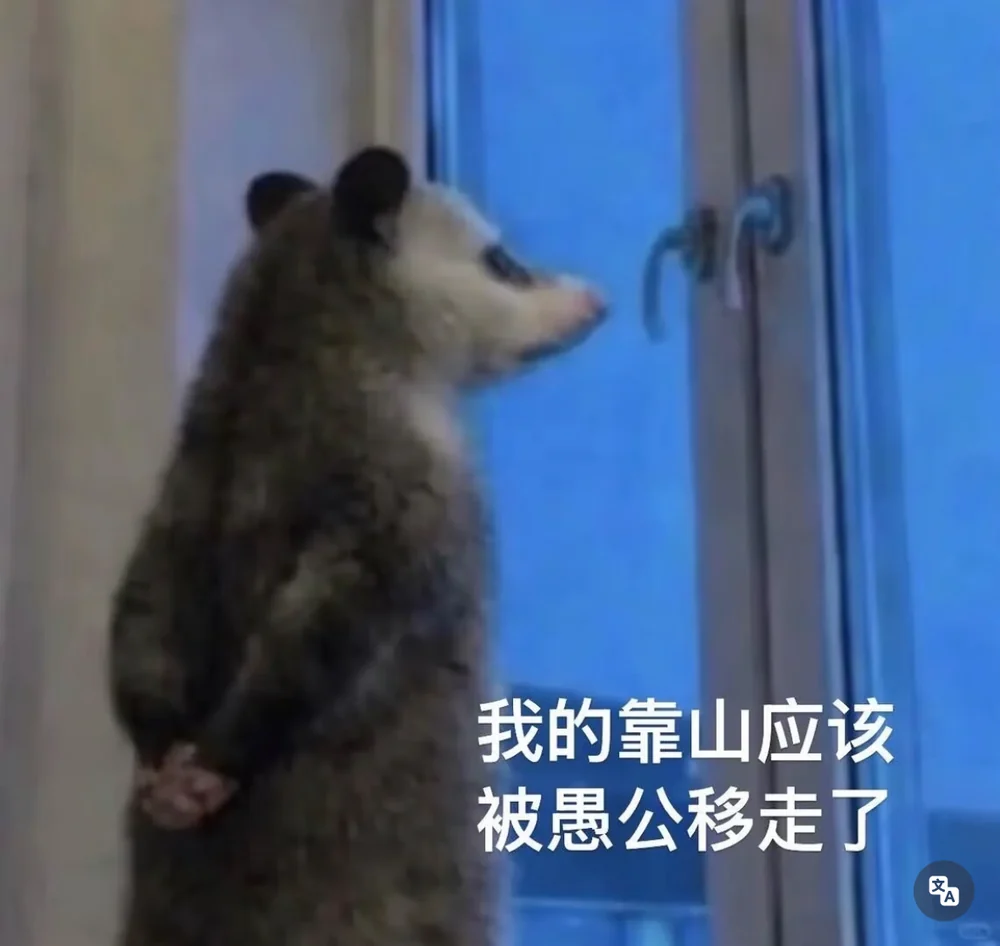
我的靠山应该被愚公移走了。 “The mountain I was leaning on got moved. By an old man with a basket.”
Your 靠山 kào shān — the mountain you lean on — is the everyday word for a patron or protector. 愚公移山 Yú Gōng yí shān is the schoolbook parable of an old man who removes a mountain one basket at a time. The caption simply lets the parable happen to the protector.
Then the comments started writing their own
This is the point where a viral image becomes a living meme. Readers stopped asking for more captions and began manufacturing them in the replies.
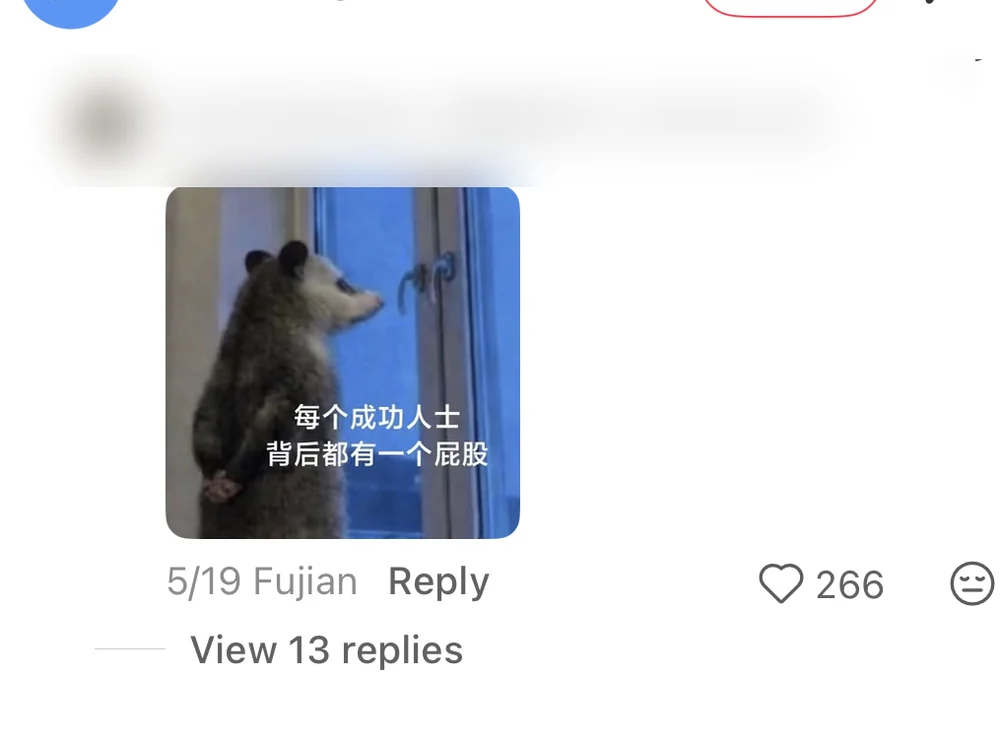
每个成功人士背后都有一个屁股。 “Behind every successful person, there is an ass.” — 266 likes · Fujian
Chinese is deforming the proverb behind every successful man is a woman. English receives an extra joke for free: ass is both the body part in the picture and the person the sentence has quietly begun describing.
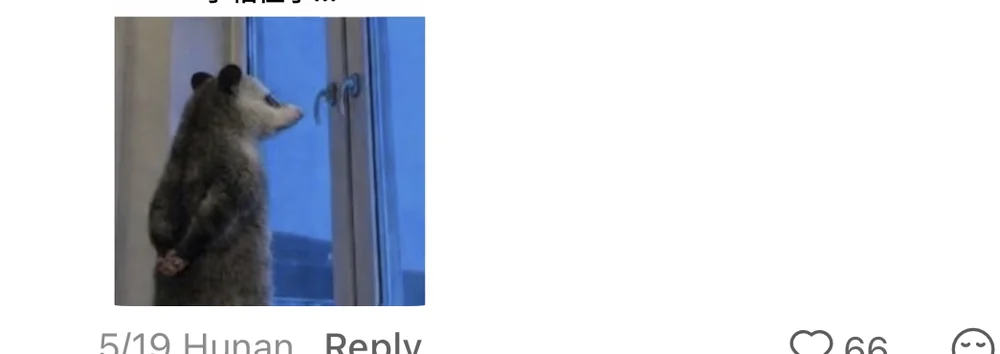
手粘住了…… “Hand’s stuck…” — Hunan
The animal’s paw is pressed against the glass. No philosophy, just an excuse generated from the photograph itself.
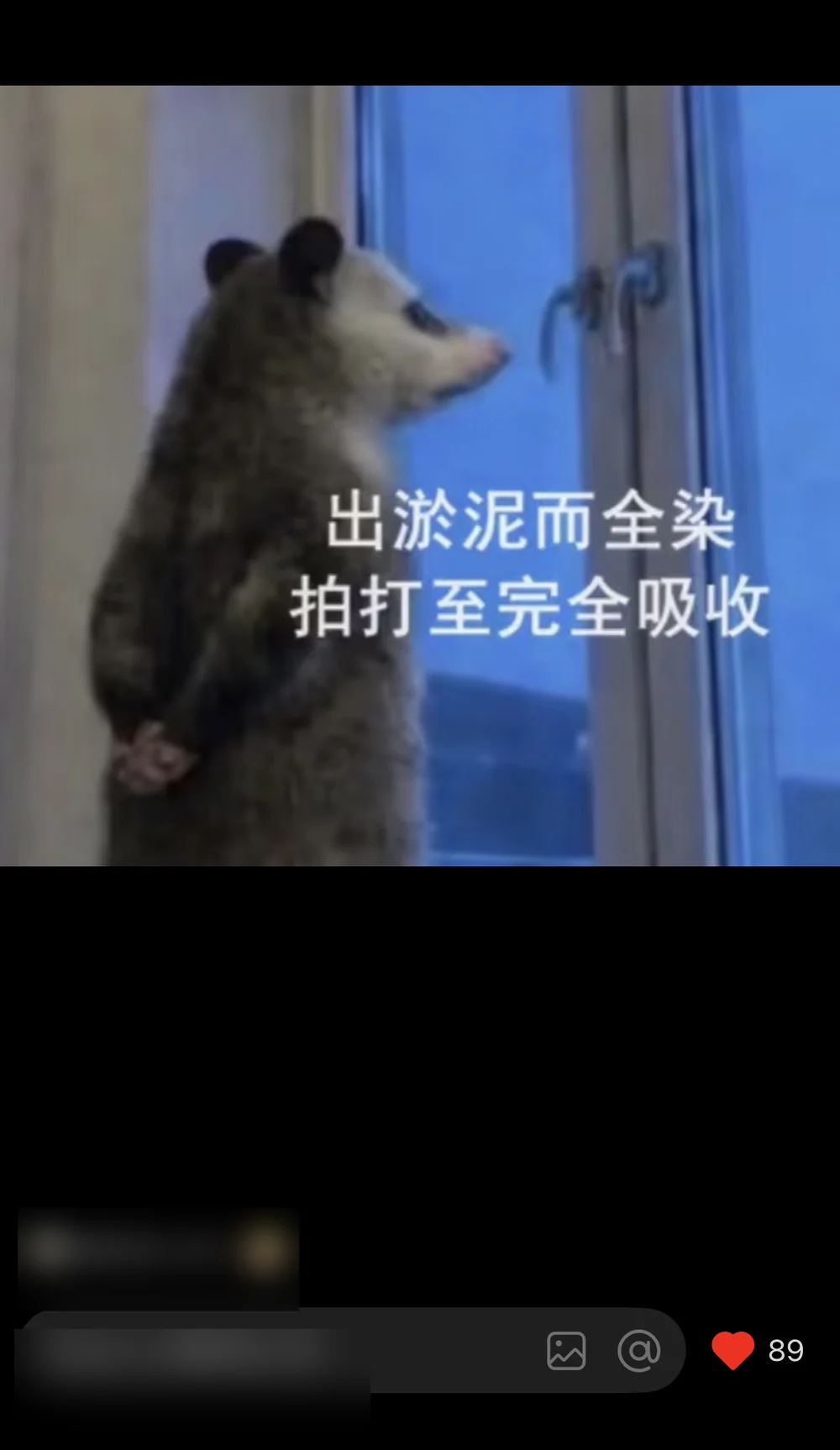
出淤泥而全染 / 拍打至完全吸收。 “Emerges from the mud, thoroughly stained. Pat until fully absorbed.” — 89 likes · Sichuan
The first half breaks 出淤泥而不染 chū yū ní ér bù rǎn — to emerge from the mud unstained, the canonical line about moral purity from the school text On the Love of the Lotus. The second half is the standard instruction on a skincare bottle. A classical ideal meets a product label and is told to keep patting.
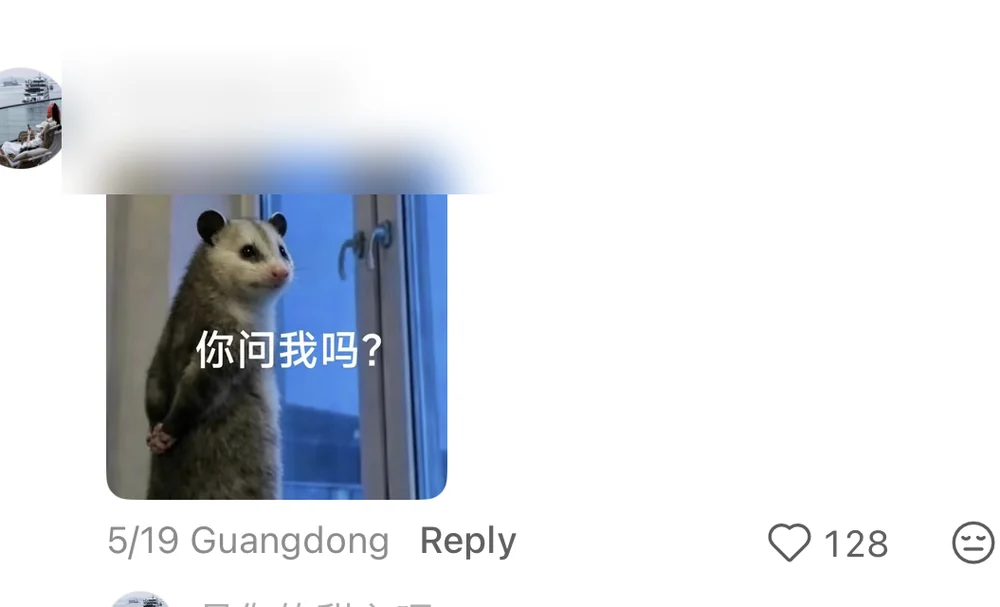
你问我吗? “You’re asking me?” — 128 likes · Guangdong
What I see
The original photograph does almost nothing. That is why it can hold everything. The folded paws read as resignation, politeness, old age, management, avoidance, or a person waiting for somebody else to finish speaking. The image supplies posture; the caption supplies the latest reason for it.
But the captions are not interchangeable nonsense. They follow a discipline. Start with a sentence everybody already knows. Move one word, exchange two characters, or take one metaphor literally. Then turn the damage inward. The speaker is not declaring that work, love, justice, adulthood, and self-improvement are fraudulent. The speaker is admitting, gently and before anyone else can, that they personally will not be rising to the occasion.
That is why the origin question became irrelevant so quickly. A meme does not need a biography once people can hear its voice — and once the comments can write the next line without being asked.
An animal that survives by playing dead. Finally, a role model.
下次热搜见。 See you at the next hot search.